You walk into a dealership with $8,000 in your pocket, pick out a Honda Rebel 500, and think you're done. Then the dealer adds freight, destination, setup, tax, and title fees. Suddenly that $6,699 MSRP is closer to $8,400 out the door. The sticker price of a motorcycle is never the full story, and the gap between MSRP and real cost catches first-time buyers off guard every single time.
So how much does a motorcycle cost in 2026? This guide breaks down real prices by type, from budget-friendly 300cc bikes to six-figure touring machines. You will see what new and used motorcycles actually sell for, what hidden costs pile on top, and how to figure out what fits your budget before you sign anything.
New Motorcycle Prices by Type
The average new motorcycle sells for somewhere between $5,000 and $25,000. But that range is almost useless without context, because a Honda Rebel 300 and a Harley-Davidson Road Glide are not the same purchase. Type matters more than brand when you are setting a budget.
Here is what each major category actually costs at MSRP in 2026:
| Type | MSRP Range | Example Model | Example MSRP |
|---|---|---|---|
| Entry Cruiser | $4,500 - $7,500 | Honda Rebel 500 | $6,699 |
| Standard / Naked | $5,000 - $10,000 | Kawasaki Z650 | $7,849 |
| Sport Bike | $5,500 - $18,000 | Yamaha YZF-R7 | $8,999 |
| Mid-Size Cruiser | $9,000 - $16,000 | Indian Scout | $12,999 |
| Adventure / Dual-Sport | $7,000 - $22,000 | BMW R 1300 GS | $19,995 |
| Touring | $18,000 - $40,000+ | Harley Street Glide | $28,499 |
| Supersport | $17,000 - $30,000+ | Ducati Panigale V4 | $28,395 |
Notice the pattern: cruisers and standards sit in the $5,000 to $10,000 range, while touring and supersport bikes jump past $18,000 fast. If your budget is under $10,000 for just the bike itself, you are shopping in the entry cruiser, standard, or beginner sport bike lane. That is not a bad thing. Some of the best first bikes ever made live in that bracket.
One thing the table does not show: out-the-door price. Dealers add freight and destination ($200 to $500), assembly/setup ($100 to $400), and document fees ($75 to $300). Then your state adds sales tax and registration. On a $7,000 bike, expect $800 to $1,500 in fees on top of MSRP. That Honda Rebel 500 at $6,699 lands at $7,800 to $8,200 once everything clears. Always ask for the "out the door" number before you commit to anything.
How Much Does a Used Motorcycle Cost?
Used motorcycles save you 20% to 50% off MSRP depending on age, mileage, and condition. A three-year-old Kawasaki Ninja 400 that listed new at $5,599 sells used for $3,200 to $4,200 with under 10,000 miles. A five-year-old Harley Sportster that listed around $12,000 new goes for $6,500 to $8,500 on the private market.
The steepest depreciation hits in the first two years. After that, prices flatten. This means a two-year-old bike is the sweet spot if you want something that feels new without paying new prices.
A few rules for used pricing:
- Under 10,000 miles: expect to pay 60% to 80% of original MSRP for a bike in good shape.
- 10,000 to 25,000 miles: prices drop to 40% to 60% of MSRP. At this point, check valve adjustments and tire wear closely.
- Over 25,000 miles: negotiating leverage shifts to you. Factor in $500 to $1,500 for deferred maintenance (chain, sprockets, brake pads, fluids).
Private party prices run 10% to 20% lower than dealer used prices, but you lose the warranty buffer. Dealers mark up used bikes to cover reconditioning and a short warranty (usually 30 to 90 days). Private sales give you the best price, but you absorb all the risk. If you go private, budget $100 to $150 for a pre-purchase inspection at an independent shop. It is the cheapest insurance you can buy.
Always check the VIN through the NICB VIN Check before handing over cash on a used bike. It is free, and it flags theft and salvage history.
Average Motorcycle Cost: What Most Riders Actually Spend
According to data from the Motorcycle Industry Council, the average transaction price for a new on-highway motorcycle in the U.S. sits around $11,000 to $13,000. That number skews higher than the median because touring bikes and premium ADV rigs pull the average up.
In practice, most first-time riders spend $4,500 to $8,000 on a new entry-level bike or $3,000 to $6,000 on a used one. Experienced riders replacing a bike tend to land in the $12,000 to $20,000 range.
Here is a quick breakdown by buyer type:
- First-time rider (new bike): $5,000 to $8,000
- First-time rider (used bike): $2,500 to $5,000
- Experienced rider upgrading: $12,000 to $22,000
- Touring / long-distance rider: $20,000 to $35,000+
How Much Does a Decent Motorcycle Cost?
The word "decent" shows up constantly in motorcycle forums, and it usually means the same thing: reliable, comfortable enough for a 2-hour ride, and not embarrassing to park next to other bikes. That sweet spot falls between $7,000 and $14,000 new.
At $7,000 to $9,000 you get bikes like the Kawasaki Vulcan S ($7,999 MSRP) or the Honda CB500F ($6,999). Both are fuel-injected, liquid-cooled, and genuinely comfortable for daily riding and weekend trips. Nothing about them screams "starter bike" in a negative way.
At $10,000 to $14,000, the options expand into mid-displacement cruisers and strong naked bikes. The Triumph Trident 660 at $8,695, the Yamaha MT-07 at $8,199, and the Indian Scout Sixty at around $10,999 all fit here. These are bikes you can ride for years without itching to upgrade.
The real question is not "how much does a decent motorcycle cost" but "how much do you want to spend on something you won't outgrow in one season?" If you can stretch to the $9,000 to $12,000 range, you get significantly more bike for the money compared to the sub-$6,000 tier.
Ownership Costs Beyond the Sticker Price
The motorcycle itself is only about 60% to 70% of your first-year cost. Gear, insurance, registration, and maintenance fill in the rest. Here is what to budget:
Riding Gear
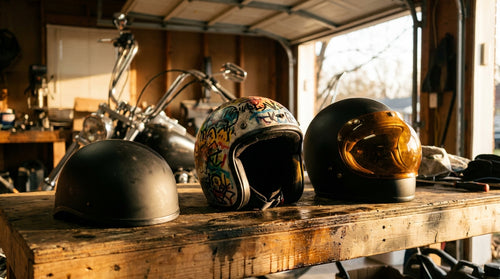
A DOT-certified helmet runs $80 to $400. A quality full face motorcycle helmet with good ventilation and a secure fit is the one thing you should never cheap out on. A leather or textile jacket adds $150 to $500. Motorcycle boots run $100 to $300, and gloves cost $30 to $150. Total for a solid starter kit: $400 to $1,200.

Buy quality gear once and it lasts for years. Buy cheap gear and you replace it every season, spending more in the long run. Real leather outlasts synthetic by 3 to 5 times in most cases.
Insurance
Motorcycle insurance averages $500 to $1,500 per year for riders over 25 with a clean record. Under-25 riders on sport bikes can expect $2,000 to $3,500 annually. Cruisers and standards are the cheapest to insure. Supersport bikes are the most expensive. Getting three quotes before you buy the bike is a smart move that saves hundreds.
Maintenance and Fuel
A basic oil change runs $30 to $60 if you do it yourself, or $80 to $150 at a shop. A set of tires costs $200 to $400 installed. Chain and sprocket replacement every 15,000 to 25,000 miles runs about $150 to $250 in parts.
Fuel is where motorcycles win. Most bikes get 40 to 60 mpg, compared to 25 to 30 mpg for the average car. On a 500cc cruiser getting 55 mpg, you spend about $1,500 per year on gas riding 8,000 miles at $3.50 per gallon.
Registration, Title, and Taxes
Registration fees vary by state. California charges about $60 per year plus CHP fees. Texas charges $30 for registration plus inspection. Title transfer on a used bike is $15 to $75 in most states. Sales tax is the big variable: 0% in states like Montana and New Hampshire, up to 10.25% in parts of Louisiana. On a $10,000 bike, that is the difference between $0 and $1,025 in tax alone. Some riders register in low-tax states through an LLC, but that comes with its own paperwork and potential audit risks.
How Much Does a Motorcycle Cost Per Month?
Monthly cost depends on whether you financed the bike or paid cash. Here is a realistic breakdown for a rider who financed a $10,000 new motorcycle at 6% APR over 48 months:
| Expense | Monthly Cost |
|---|---|
| Loan payment (48 months, 6% APR) | $235 |
| Insurance | $75 - $125 |
| Fuel (500 miles/month at 50 mpg) | $35 |
| Maintenance reserve | $40 |
| Registration / parking | $15 |
| Total | $400 - $450 |
If you paid cash, drop the loan payment and your monthly cost drops to $165 to $215. That is cheaper than most car payments by a wide margin.
One number that surprises people: riders who finance a $7,000 used bike instead of a $10,000 new one save roughly $70 per month on loan payments alone (36-month term, same rate). Over three years, that adds up to $2,500 you keep in your pocket.
Cash buyers have an additional advantage beyond skipping interest: you negotiate harder. Dealers love financing because they earn a cut of the interest. A cash offer 5% to 10% below sticker on a used bike at a dealership has a real chance of landing. On a $9,000 used bike, that is $450 to $900 saved before you ride it home.
5 Pricing Mistakes That Burn New Riders
These show up constantly, and each one costs riders real money:
- Budgeting only for the bike. First-time buyers who forget gear, insurance, and registration end up scrambling for an extra $1,500 to $2,500 after the purchase. Factor everything in before you walk into the dealership.
- Skipping the pre-purchase inspection on a used bike. A $150 mechanic inspection catches valve issues, fork seal leaks, and electrical gremlins that cost $500 to $2,000 to fix. Every used motorcycle deserves one.
- Buying too much bike for your skill level. A brand-new Ducati Panigale at $28,395 is not a first bike. You will drop it, and the repair bill on a dropped Panigale starts at $1,500 for fairings alone. Start on something forgiving. A $4,000 to $7,000 bike teaches you the same skills without the financial pain.
- Ignoring insurance quotes until after the purchase. A Yamaha R1 costs three to four times more to insure than a Honda Rebel 500. Some riders get stuck with a bike they can afford to buy but not to insure. Always run insurance quotes before you commit.
- Choosing dealer financing without comparing. Dealer rates often run 7% to 12% APR. A credit union pre-approval at 4% to 6% APR saves you $500 to $1,500 over the life of a typical loan. Walk in with your own financing already approved.
What Fits Your Budget
The real answer to "how much does a motorcycle cost" depends on you: what you ride, where you ride, and whether you buy new or used. But here is the short version. A first bike with full gear and insurance will run you $5,000 to $10,000 all in. A mid-range upgrade with good leather gloves, a quality motorcycle jacket, and proper boots will land between $12,000 and $20,000 total. A touring setup can climb past $30,000 before accessories.
Set your total budget first, then subtract gear and insurance. The number that is left is your bike budget. That approach keeps you from overspending on the machine and riding home without the protection you actually need.
If you are putting together your riding kit, the deals on helmets and gear at ALR are a good starting point for quality stuff that does not break the budget.

Yes