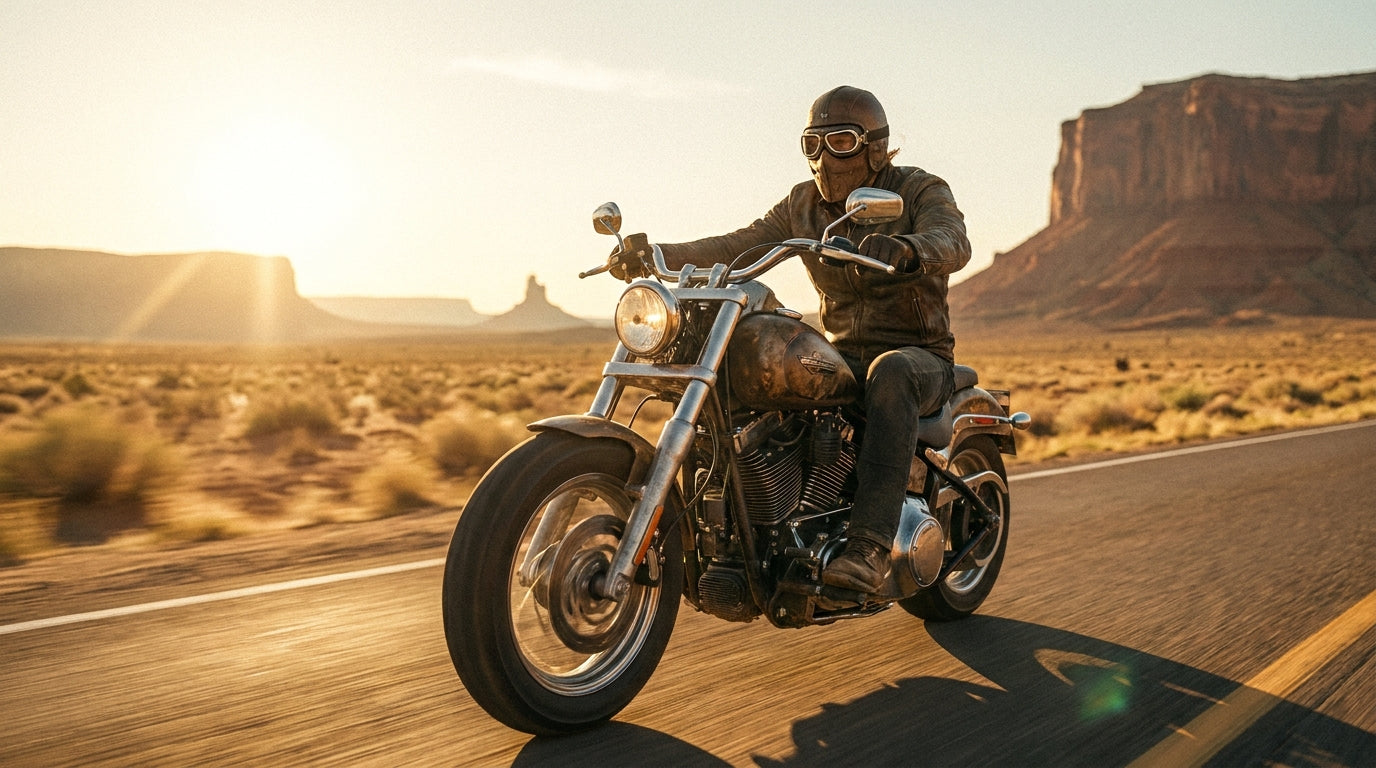
Riding at 65 mph without eye and face protection turns every bug, pebble, and gust of highway grit into a projectile. If you wear a half helmet or ride open-face, you already know the drill. Your visor only covers so much. Your bandana slips every 10 minutes. A motorcycle face mask with goggles solves both problems in one setup. The right combo stays locked in place, keeps your vision sharp, and handles wind, cold, and dust without fogging out on you.
This guide breaks down the three main combo styles, which lens tints work for which conditions, what materials actually last past one season, and the fitting mistakes that waste your money. All real specs and real gear. No guesswork.
Why Riders Pair a Face Mask with Goggles
Open-face and half helmet riders deal with a coverage gap. The helmet protects the top of your head, but everything below the brow line is exposed. Wind stings your eyes at speed. Dust and gravel pepper your cheeks on back roads. Below 50 degrees, wind chill makes a 30-minute ride feel brutal on bare skin.
Sunglasses help with glare, but they fail at highway speed. Air rushes behind the lens, dries your eyes out, and lets debris in from the sides. That is why goggles beat sunglasses for anything over 45 mph. Goggles sit flush against your face with a foam gasket that seals wind out from every angle.
A face mask covers the lower half of your face. It blocks wind chill on your chin, mouth, and neck. It keeps dust out of your nose and throat on gravel roads and dirt trails. Paired together, goggles and a mask give you full-face coverage without the weight and heat of a full-face helmet.
One spec that matters here: look for goggles rated to ANSI Z87.1. That is the impact standard that separates real riding goggles from costume pieces. A rock kicked up by a truck at 70 mph will crack an unrated lens on contact.
Detachable vs All-in-One vs Separate Pairs
There are three ways to set up a motorcycle face mask with goggles combo. Each one has trade-offs worth knowing before you spend.
Detachable combos are the most popular setup among riders. The goggles clip or snap onto a neoprene mask, so you can pop them off when you stop for gas or pull into a parking lot. Most of the skull-style masks at rallies and group rides use this design. The downside is that the connection point between mask and goggles can let air in if the fit is not snug enough.
All-in-one units integrate the mask and goggles into a single piece. No gap between components, no slippage during a ride. These work well for cold-weather highway riding because there is zero space for wind to sneak through. The trade-off is flexibility. You cannot swap lens colors or wear just the mask on warmer days.
Separate pairs mean buying a standalone mask and standalone goggles independently. This gives you the most options for customization. You can mix lens tints, swap mask thickness by season, and replace one piece without tossing the other. The catch is that getting a seamless fit takes trial and error. Some goggles sit too high on certain masks, leaving a strip of exposed skin across the nose bridge.
| Setup | Best For | Gap Risk | Flexibility |
|---|---|---|---|
| Detachable | Rally, casual riding | Medium | High |
| All-in-one | Cold weather, highway | Low | Low |
| Separate | Experienced riders | Varies | Very high |
Most riders start with a detachable combo and upgrade from there once they know what lens tint and mask thickness they prefer for their typical rides.


Best Lens Colors for Motorcycle Goggles
Lens tint matters more than most riders realize. The wrong color cuts your visibility instead of helping it. Here is what works and when to use each one.
Clear lenses are for night riding and heavy overcast. They let 85 to 90 percent of visible light through and add zero color distortion. If you do any riding after sunset, keep a clear pair in your saddlebag or tank bag.
Smoke or gray lenses cut glare in direct sunlight without shifting colors. They reduce light transmission to about 15 to 20 percent, roughly matching quality sunglasses. Good for midday highway miles in open sun.
Yellow and amber lenses are the most versatile tint for riders. They filter blue light in the 400 to 500 nanometer wavelength range, which boosts contrast in flat, low-light conditions. Fog, haze, dawn, and dusk all look sharper through a yellow lens. Harley-Davidson's own Wiley X riding eyewear line uses amber as their default tint for this exact reason.
Mirrored lenses look aggressive and reduce surface glare, but they scratch fast and become difficult to see through at twilight. They are a style pick, not a performance one.
| Lens Color | Light Transmission | Best Conditions |
|---|---|---|
| Clear | 85-90% | Night, heavy overcast |
| Smoke/Gray | 15-20% | Full sun, midday |
| Yellow/Amber | 70-80% | Fog, dawn, dusk |
| Mirrored | 10-15% | Bright sun only |
If you only own one pair of goggles, yellow is the safest single-lens choice for year-round riding in mixed conditions.
Skull Face Masks with Goggles: The Most Popular Style
The skull-print neoprene mask with detachable goggles is the best-selling face mask with goggles combo at most biker shops. There is a straightforward reason it dominates: it looks aggressive on the road, blocks wind efficiently, and the dark print hides dirt and wear better than solid colors do.
Most skull combos use 2mm neoprene for the mask body and polycarbonate lenses rated to ANSI Z87.1 in the goggles. The neoprene stretches enough to fit over a half helmet chin strap without bunching up. A Velcro or hook-and-loop closure at the back lets you adjust tension depending on the weather and your riding speed.
Detachable goggles on these sets usually ship with a smoke lens installed and a clear lens included in the box. Swapping takes about 10 seconds. Pull the retaining tabs, pop the lens out, and snap the replacement in.
One thing to watch for: cheaper skull masks use thin 1mm neoprene that stretches out after a few months of regular use. The stitching around the nose bridge frays, and the goggles stop clipping in flush. A well-made version uses reinforced stitching at the stress points and consistent 2mm thickness across the full mask. The skull face mask buyer's guide covers more detail on what separates the good ones from the disposable ones.


Full Face Coverage vs Half Mask Setups
Full-coverage masks wrap from the bridge of your nose all the way down to your collarbone. They tuck into your jacket collar and create a continuous wind barrier that shields your entire neck. For highway riding in cold weather, full coverage is the right call. At 70 mph in 40-degree air, wind chill drops the felt temperature to around 22 degrees Fahrenheit. A half mask leaves your neck and throat exposed to that.
Half masks stop at the chin. They breathe better, weigh less, and work well for summer cruising where overheating is a bigger concern than wind chill. If you are riding city streets at 35 mph on a 90-degree day, a full-coverage neoprene mask will have you drenched in sweat within 15 minutes.
The goggles function the same way with either mask style. But full-coverage masks need extra attention to fit around the goggle frame. If the mask bunches up under the goggles, it pushes the foam gasket away from your cheekbones and creates a gap. That gap lets in dust and wind, which defeats the purpose of wearing both pieces.
Test the fit with your helmet on. Tighten the mask strap first, then position the goggles over it. If you can see any daylight between the goggle foam and your face, the combo is not sealed properly. For standalone goggle specs and fit tips, the motorcycle goggles guide covers everything in detail.


What to Check Before You Buy
Not every combo is built to the same standard. Here is a quick list of specs that separate decent riding gear from throwaway junk.
Anti-fog coating. If the goggles lack anti-fog treatment on the inside of the lens, your breath will cloud them in under a minute during cold rides. Double-pane lenses are the premium solution. They create an insulating air gap between two layers that prevents condensation from forming.
Breathable nose and mouth panels. Look for mesh or perforated material over the nose and mouth area of the mask. Solid neoprene traps exhaled air and pushes it straight up into the goggles. That warm, moist air is the number one cause of foggy lenses on the road.
UV400 protection. This standard blocks 99 to 100 percent of UVA and UVB rays. Without it, hours of direct sun exposure on long rides will damage your eyes over time. UV400 is the benchmark you want on every pair.
Adjustable strap with give. A fixed-length strap fits one head size and nothing else. An adjustable strap with a sliding buckle or elastic panel accommodates a range of head sizes, especially when you need the extra room to fit over a helmet.
Polycarbonate lenses. Glass cracks on impact. Acrylic scratches easily. Polycarbonate is lighter than glass, tougher than acrylic, and meets ANSI Z87.1 impact requirements by default. Every serious motorcycle mask setup should pair with polycarbonate goggles.
5 Common Mistakes with Motorcycle Goggles and Face Masks
1. Skipping anti-fog. Every rider who has pulled over three times in 20 minutes to wipe condensation off their lenses knows this pain. Anti-fog coating or double-pane construction is not optional for cold-weather riding. Period.
2. Buying a thick mask for summer. A 3mm neoprene mask in July will overheat you fast. Switch to a thinner moisture-wicking fabric or mesh-paneled mask when temperatures climb above 75 degrees. Save the thick neoprene for fall and winter months.
3. Using the wrong lens tint for the conditions. Smoke lenses at dusk cut your incoming light by around 80 percent. Clear lenses under noon sun cause squinting and eye strain. Match the lens to the conditions you are riding in, or carry a second lens in your pack.
4. Ignoring the nose bridge gap. The spot where your goggles sit on top of the mask is the most common air leak point on any combo. If you feel cold wind hitting the bridge of your nose, the goggles are not seated properly against the mask. Adjust the mask flat before pressing the goggles down.
5. Not testing the full combo with your helmet. A mask and goggles that feel perfect on a bare head can bunch, pinch, or shift once you add a helmet. The helmet changes pressure points on your forehead and temples. Always do a complete test with helmet, mask, and goggles together before heading out on a ride.
Picking the Right Combo for Your Rides
The right motorcycle face mask with goggles combo depends on your riding conditions, helmet type, and the weather you deal with most. Start with a detachable skull combo if you want maximum flexibility between stops. Go with an all-in-one unit if you ride mostly highways in cold months and need a tight seal.
For combos that pair ANSI-rated goggles with quality neoprene masks, the goggles with face masks collection is a solid starting point. Every set ships with at least one spare lens, and the detachable options let you strip the goggles off when you pull over without removing the mask.

No comments yet. Be the first rider to weigh in.