
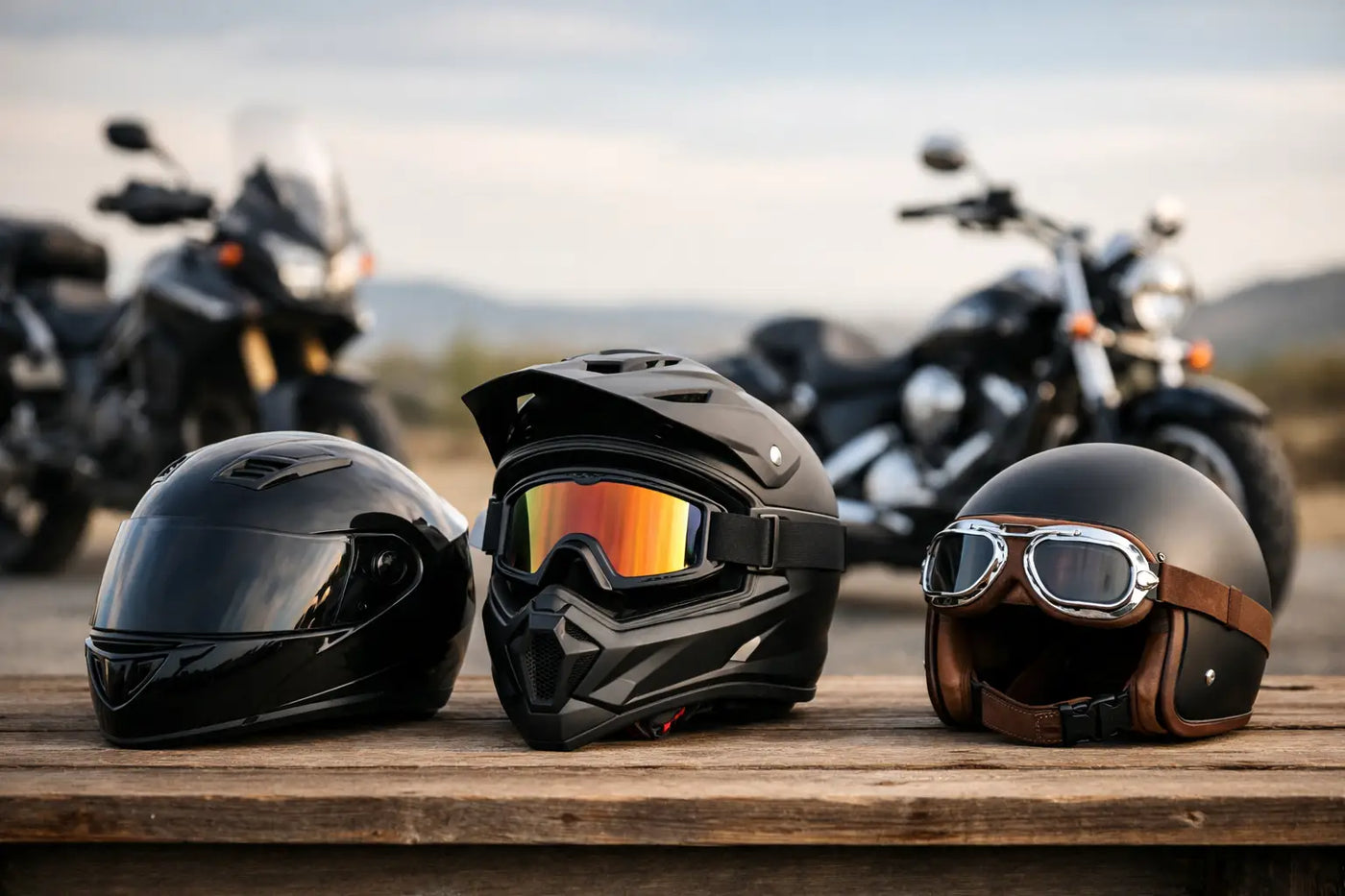
You feel a bad helmet fast. It pinches your forehead, lifts at highway speed, fogs when you stop at a light, and turns every mile into a fight. Good motorcycle helmets do the opposite. They stay planted, keep your head clear, cut down fatigue, and match the way you actually ride.
That matters because a helmet is not just another piece of gear you toss in the garage. It is part safety equipment, part comfort system, and part statement. Riders want protection, sure, but they also want a lid that fits their machine, their route, and their style without looking generic or feeling cheap.
Why motorcycle helmets are not all the same
A cruiser rider doing weekend highway miles does not need the exact same setup as a daily commuter splitting city traffic or a touring rider knocking out long-distance runs. On paper, many helmets can look similar. On the road, the differences show up fast.
Shell shape, interior padding, visor design, ventilation, weight, and noise control all change the riding experience. Some motorcycle helmets are built for aggressive airflow and a lean-forward riding position. Others are better for upright bikes, longer hours, and steady wind exposure. If you pick based on looks alone, you may end up with a helmet that works against you.
The right call usually comes down to how you ride most often, not how you ride once a season. If most of your miles are local bar hops, comfort at lower speeds and easy on-off convenience might matter most. If you live on the interstate, wind stability and reduced noise move way up the list.
Start with safety, then get picky
Every rider has style preferences, but safety comes first. A tough-looking shell means nothing if the fit is wrong or the build quality is weak. When you shop helmets, look for recognized safety standards and solid construction before you worry about graphics, finish, or add-ons.
Fit is a safety issue, not just a comfort issue. A helmet that is too loose can shift around, create pressure points, and reduce the protection you are counting on when things go bad. Too tight, and you get headaches, hot spots, and constant distraction. A proper fit should feel snug all around without sharp pain. It should stay steady when you move your head, and your cheeks should feel supported without being crushed.
There is also the reality that head shape matters. Some riders have a more round head shape, others more oval. Two helmets can be the same labeled size and fit completely differently. That is one reason bargain shopping by size tag alone often backfires.
Full face, modular, half, or open face?
This is where riding style and personal tolerance come into play. Full-face motorcycle helmets are the go-to choice for riders who want the most coverage, better wind management, and stronger all-around protection. For highway riding, bad weather, and longer trips, they are hard to beat.
Modular helmets appeal to riders who want flexibility. You get the structure of a full-face design with the convenience of a flip-up front. That can be a real plus for touring riders, commuters, and anyone who stops often. The trade-off is that modular helmets can be heavier, and some riders notice more wind noise depending on the model.
Open-face and half helmets carry a classic look that a lot of cruiser and V-twin riders still love. They can feel less restrictive and better in hot weather at lower speeds. But there is no getting around the trade-off - less coverage means less protection from impact, wind, debris, and weather. If that style fits your identity, go in with clear eyes and do not mistake minimal coverage for maximum toughness.
Comfort decides whether you actually wear it
A helmet can check every box on paper and still end up collecting dust if it feels miserable after 30 minutes. Comfort is what turns a purchase into gear you trust every ride.
Weight is a big part of that. A heavier helmet may not seem like a problem in the store, but over a full day in the saddle, your neck will have an opinion. Lighter helmets usually cost more, so this becomes a budget call. Some riders would rather pay extra up front than deal with fatigue later.
Ventilation also matters more than riders expect. Good airflow helps with heat, fog control, and focus. But more vents can also mean more noise. That is the constant trade-off with motorcycle helmets - the feature that improves one part of the ride may create a downside somewhere else.
Interior lining is another make-or-break detail. Removable, washable liners are worth having, especially if you ride hard in summer. Sweat, heat, and long miles will wear down a cheap interior fast. A quality liner keeps the helmet feeling fresher and more secure over time.
Visibility is not optional
A sharp-looking helmet does no favors if you cannot see clearly through the shield. Optical clarity, anti-fog performance, and shield seal all matter. If you ride in changing weather or cooler temperatures, fogging can go from annoying to dangerous in a hurry.
Face shields should open and close smoothly, seal well, and hold up to regular use. Sun shields can be a strong bonus for riders who hit changing light conditions, especially on longer runs. Some riders prefer the simplicity of a clear shield and sunglasses. Others want the convenience of a built-in tinted option. Neither approach is wrong. It depends on when and where you ride.
Peripheral vision matters too. A helmet that feels protective but limits your field of view too much can become a problem in traffic. Riders need to see mirrors, lane movement, and road hazards without fighting the shell design every second.
Style still counts, and every rider knows it
Nobody in biker culture buys a helmet like they are shopping office supplies. The look matters. The finish matters. The shape matters. Your gear says something before the engine even turns over.
That does not mean style should override function, but it should not be treated like an afterthought either. A rider on a blacked-out cruiser may want a low-profile, aggressive look. A touring rider may lean toward features first and let the styling follow. A custom bike owner may want something that ties into the whole build, from vest patches to boots to saddlebags.
The smart move is finding motorcycle helmets that hit both sides - road-ready performance and the right attitude. That is where shopping from a rider-focused store makes a difference. A place like American Legend Rider understands that gear is not just gear. It is part of the identity.
Price matters, but cheap can get expensive
Most riders have a budget. That is real life. But there is a difference between getting a deal and buying a headache.
Lower-priced helmets can make sense for casual riders, second helmets, or straightforward local use, as long as they meet proper safety standards and fit correctly. But if you ride often, spend serious time at speed, or want better long-term comfort, stepping up in quality usually pays off. Better materials, better interior construction, better shields, and better stability on the road all add up.
The mistake is buying based on sticker price alone. A helmet that is uncomfortable, noisy, and worn out in one season is not a bargain. It is money spent twice.
How to choose the right helmet for your ride
Think about your bike, your route, and your tolerance for heat, noise, and weight. A short-trip cruiser rider may be perfectly happy with a simpler setup. A rider doing all-day miles probably needs stronger wind management, better padding, and less neck strain.
Be honest about weather too. If you ride through cold mornings, rain, or shoulder season conditions, coverage and shield performance matter more. If most of your riding is warm-weather local cruising, you might prioritize airflow and convenience.
Then think about how often you ride. The more hours you log, the less sense it makes to compromise on fit and comfort. Frequent riders notice every flaw faster.
The helmet should work for the rider, not the other way around
There is no single best helmet for everyone, and any brand claiming otherwise is selling fantasy. The best motorcycle helmets are the ones that fit your head right, match your riding reality, and hold up mile after mile without making you fight your own gear.
Buy with purpose. Look past hype, pay attention to fit, and choose the helmet you will actually want to wear every time you throw a leg over the bike. When your helmet feels right, the whole ride gets better.


No comments yet. Be the first rider to weigh in.