
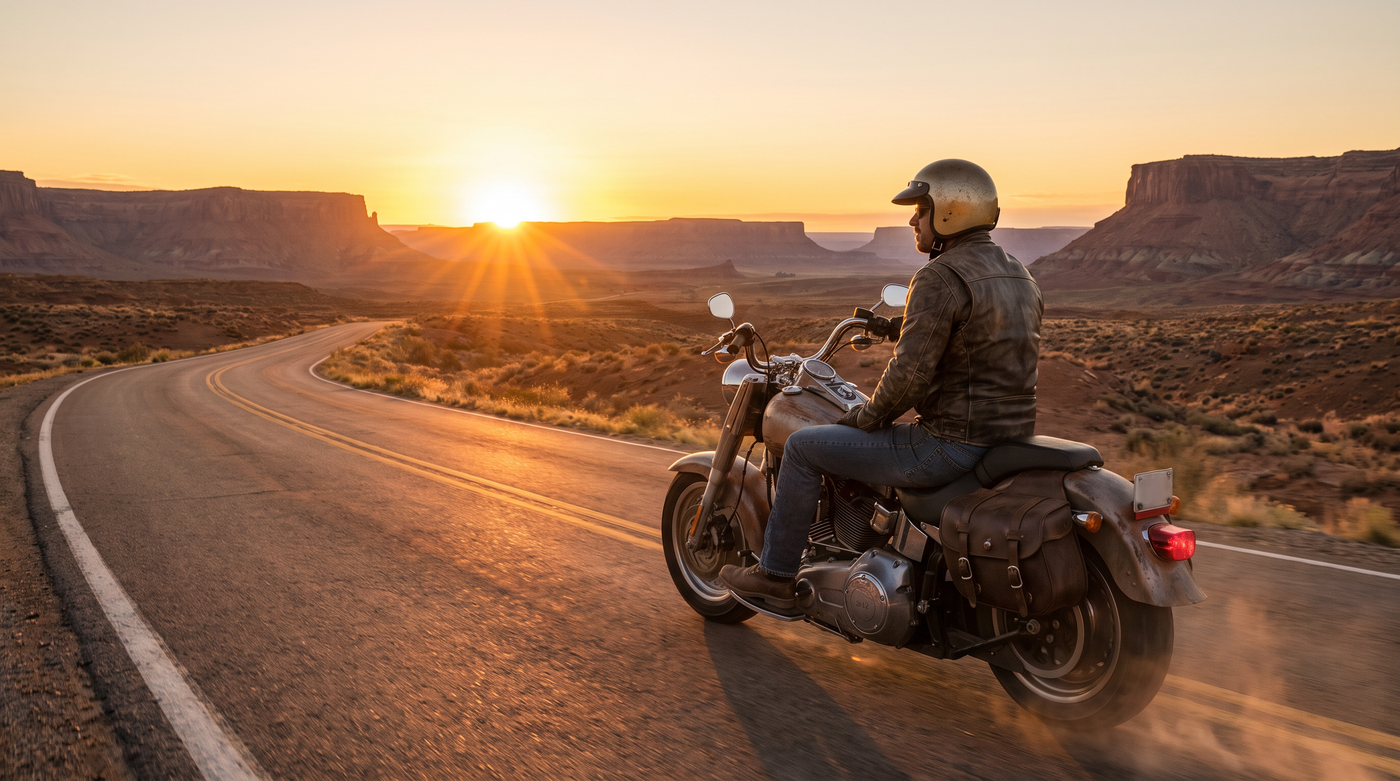
A full face helmet feels like the safe choice until you wear one through a Texas summer at 95 degrees. The visor fogs, your face drips, and by mile 20 you're ready to rip it off. That's why so many cruiser and city riders end up switching to an open face motorcycle helmet. It keeps the top and sides of your head protected while letting air actually reach your face.
This guide breaks down every style of open face motorcycle helmet, from classic 3/4 shells to retro-styled fiberglass lids. You'll learn what DOT certification covers on an open face design, which materials hold up, and how to pick the right one for your riding style and budget.
What Makes a Helmet "Open Face" vs. Half Shell and Full Face
The term gets thrown around loosely, so here's the actual distinction. An open face motorcycle helmet covers the top, back, and sides of your head down to your jawline, but leaves your chin and lower face exposed. It's also called a 3/4 helmet because it covers roughly three-quarters of your head.
A half shell (or half helmet) only covers the crown. Think of the classic DOT beanie that barely reaches your ears. A full face wraps all the way around, including a chin bar and visor that seals your entire face inside the shell.
The open face sits in the middle. The Bell Custom 500, one of the most recognized open face helmets on the market, weighs 2.2 lbs in its fiberglass shell version. That's about 0.8 lbs lighter than Bell's full face Qualifier, and the difference is obvious after two hours in the saddle. You get real head protection without the enclosed feeling that pushes some riders toward less protective half shells.
DOT Ratings on Open Face Helmets: What You Actually Get
Every helmet sold legally in the U.S. needs to pass DOT FMVSS 218 testing. That standard tests impact absorption, penetration resistance, and retention (the chin strap holding the helmet on your head during a crash). An open face helmet that carries a DOT sticker has passed the same impact and penetration tests as a full face lid.
What DOT does not test on an open face helmet is chin protection. There's no chin bar to test. The National Highway Traffic Safety Administration reports that about 19.4% of motorcycle helmet impacts occur on the chin area. That's the trade-off you accept with an open face design. Your skull, temples, and the back of your head get certified protection. Your jaw does not.
Some open face helmets also carry ECE 22.06 certification, the European standard. ECE tests at a wider range of impact angles than DOT, including rotational forces. A dual-certified helmet (DOT + ECE) gives you the broadest safety coverage available in an open face design. The Biltwell Bonanza and the Bell Custom 500 both offer dual certification in most colorways.
Three Styles of Open Face Helmets and Who They're For
Classic 3/4 Shell
This is the standard open face shape. A rounded shell with an integrated or snap-on visor, padded interior, and a D-ring chin strap. It's the most common style on cruisers and touring bikes. The HJC IS-33 II is a strong example at the $130 price point. It runs a polycarbonate shell, removable liner, and a built-in sun visor that drops down behind the main shield. If you want a straightforward open face motorcycle helmet that just works, a 3/4 shell is the baseline.
Retro and Cafe Racer Open Face
Fiberglass or composite shell, minimal padding, and a stripped-down look inspired by 1960s racing. These helmets pair with riding goggles rather than a built-in visor. The Biltwell Gringo S and the Bell Bullitt are the two benchmarks in this category. The Bullitt's hand-laid fiberglass shell weighs 3.1 lbs, which is heavier than most polycarbonate options, but the low-profile fit and vintage aesthetics make it the top seller among cafe racer and scrambler riders. Budget retro options from TORC and ILM run $80 to $110 and use a similar shape with ABS plastic instead of fiberglass.
German-Style (Shorty) Open Face
A low-profile shell that sits close to the skull, popular with chopper and bobber riders. These look similar to a half helmet but extend further down the sides and back, meeting the 3/4 coverage threshold. The Daytona Cruiser is the most common DOT-approved option in this category at around $70. It weighs 1.8 lbs and runs a polycarbonate shell with a snap-on visor. Riders who want the look of a half shell with more coverage than a half shell actually provides are the target audience here.
Shell Materials: Polycarbonate vs. Fiberglass vs. Carbon Fiber
The material your open face helmet is made from determines weight, impact performance, and price. Here's how the three common options compare.
Polycarbonate (thermoplastic): the most affordable option. Lightweight, passes DOT easily, and handles a single hard impact. The catch is that polycarbonate degrades faster under UV exposure than fiberglass. Most manufacturers recommend replacing a polycarbonate helmet every 3 to 5 years, even without a crash. Budget helmets under $120 almost always use polycarbonate.
Fiberglass (or fiberglass composite): stronger per ounce, better at distributing impact force across a wider area, and more resistant to UV breakdown. A fiberglass open face helmet costs $150 to $350 depending on brand and features. The shell is hand-laid in multiple layers, which is why prices vary so much. Bell, Biltwell, and Shoei all use fiberglass for their premium open face models.
Carbon fiber: the lightest and strongest option. A carbon fiber 3/4 helmet weighs 15 to 25% less than a fiberglass equivalent. The AGV X70 carbon shell comes in at 1.9 lbs. But prices start around $400 and climb fast. Unless weight savings are a priority (long-distance touring, neck issues), carbon fiber is more about bragging rights than practical benefit for most riders.
| Material | Weight (typical) | Price Range | UV Lifespan | Best For |
|---|---|---|---|---|
| Polycarbonate | 2.0-2.5 lbs | $60-$130 | 3-5 years | Budget, occasional riding |
| Fiberglass | 2.2-3.1 lbs | $150-$350 | 5-7 years | Daily riders, best value |
| Carbon Fiber | 1.6-2.0 lbs | $400-$700+ | 7+ years | Touring, weight-sensitive |
Open Face vs. Full Face vs. Half Shell: The Real Trade-Offs
The debate between open face and full face never ends, so here's what the numbers say.
| Feature | Open Face (3/4) | Full Face | Half Shell |
|---|---|---|---|
| Head coverage | ~75% | ~100% | ~50% |
| Chin protection | None | Full chin bar | None |
| Airflow | High | Low-moderate (vents) | Maximum |
| Weight | 2.0-3.0 lbs | 3.0-4.0 lbs | 1.5-2.2 lbs |
| Noise at 60 mph | Loud (wind, road) | Quiet-moderate | Very loud |
| Peripheral vision | Wide | Restricted by visor frame | Wide |
| Price range | $60-$400 | $100-$700 | $40-$150 |
For cruiser riders doing sub-highway speeds in warm weather, the open face motorcycle helmet hits the sweet spot. For sport riders or anyone regularly above 70 mph on the interstate, a full face is the safer and quieter choice. The full face helmet guide covers those options in detail.
Best Goggles and Shields for Open Face Riding
An open face helmet without eye protection is rough above 30 mph. Bugs, dust, and wind dry your eyes out fast. You have three options.
Snap-on bubble shield: clips to the three snaps on most 3/4 helmets. Covers your entire face from forehead to chin. The clear version works for night riding, and a tinted version handles daytime glare. Biltwell's Bubble Shield ($30) is the most popular aftermarket option. It fits Bell, Biltwell, and most universal 3-snap helmets.
Riding goggles: seal around your eye sockets and stay put at speed. The best choice for retro and cafe racer helmets where a bubble shield would ruin the look. Look for foam-sealed goggles with anti-fog lenses. The Bobster Cruiser II ($25) uses interchangeable lenses (clear, smoke, amber) and fits over prescription glasses. For more options, the aviator goggles guide breaks down every style.
Riding sunglasses: the simplest option but the weakest at wind protection. Wrap-around frames with foam backing (like the 7eye brand) block side wind better than standard sunglasses. But they still let air in around the edges. Fine for city speeds, not great at 55 mph and above.
Five Common Mistakes When Buying an Open Face Helmet
Buying the wrong size based on hat size. A medium in one brand is not a medium in another. The HJC IS-33 II medium fits a 22.4 to 22.8 inch head circumference, while the Bell Custom 500 medium fits 22 to 22.5 inches. Measure your head with a tape measure around the widest point above your ears. Then check the manufacturer's specific size chart, not a generic S/M/L guide.
Skipping the break-in period. A new open face helmet should feel snug, almost too tight, for the first few rides. The EPS liner and cheek pads compress 10 to 15% over the first 15 to 20 hours of wear. If it feels comfortable in the store, it will be loose in two weeks and start shifting at speed.
Ignoring wind noise. Open face helmets are louder than full face helmets at highway speed. A full face at 60 mph typically registers around 85 to 90 dB. An open face at the same speed can hit 95 to 100 dB, enough to cause hearing damage over time. Foam earplugs ($0.50 per pair) or molded riding plugs ($15 to $25) cut 20 to 30 dB and make long rides far more comfortable.
Choosing looks over fit. A retro fiberglass helmet looks incredible on the shelf. But if the shell shape doesn't match your head shape (round, intermediate oval, or long oval), it will create pressure points at the temples or forehead. Most American riders have intermediate oval heads. Bell and HJC fit intermediate oval well. Arai and Shoei J-Cruise fit rounder head shapes better.
Forgetting chin strap type. D-ring straps are the safety standard. Some budget open face helmets use quick-release buckles that can pop open under impact force. A D-ring strap requires threading the strap through two metal rings, which holds firm even in a slide. It takes an extra three seconds to fasten, and it could save your helmet from flying off in a crash.
Picking the Right Open Face Helmet for Your Ride
Match the helmet to what you actually ride. Cruiser and touring riders benefit from a standard 3/4 shell with a built-in sun visor and face shield. Cafe racer and scrambler riders will prefer a retro fiberglass shell paired with goggles. Chopper and bobber riders who want the lowest profile possible should look at German-style shorty open face helmets.
For budget picks under $130, polycarbonate shells from HJC, Daytona, and ILM cover the basics with DOT certification. For a lid you plan to wear daily for years, fiberglass from Bell, Biltwell, or TORC in the $150 to $250 range is worth the step up. And if you want top shelf, the Shoei J-Cruise III ($500) adds Bluetooth-ready cutouts, a built-in sun visor, and Shoei's dual-layer EPS that's hard to match at any price.
If you're shopping for an open face motorcycle helmet, the helmets collection has DOT-rated picks in every style mentioned here.
No comments yet. Be the first rider to weigh in.