
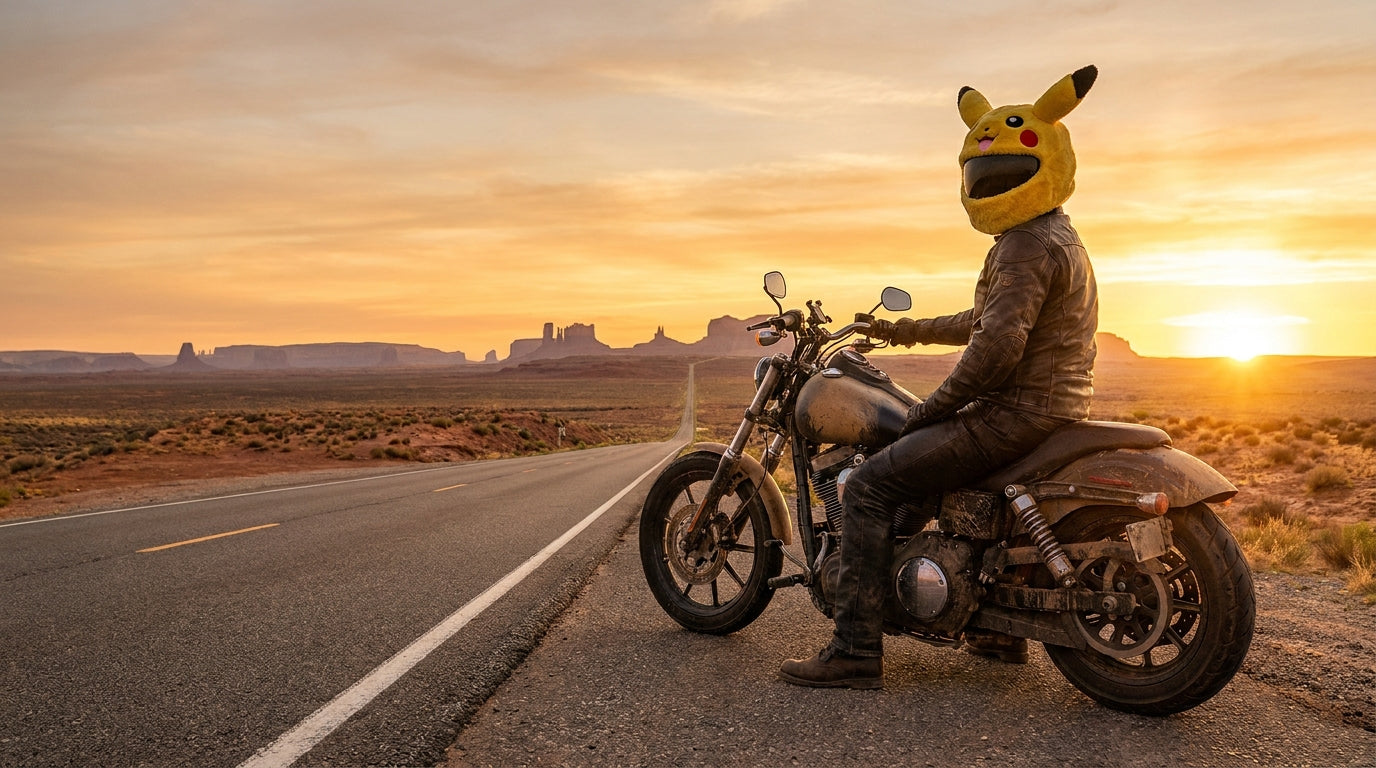
Few things turn heads at a gas stop like a bright yellow Pikachu helmet cover sitting on top of a full-face lid. One rider pulls in, ears poking straight up off the shell, and suddenly half the parking lot has their phone out. A Pikachu helmet cover is one of the cheapest and fastest ways to make any motorcycle helmet stand out from every other black or white shell on the road.
This guide covers the main pikachu helmet cover styles available, how sizing works across different helmet shapes, which materials hold up at speed, and the mistakes that lead to covers ripping off on the highway. Everything here comes from real product specs and rider feedback, not guesswork.
What a Pikachu Helmet Cover Actually Is (and Why Riders Use Them)
A helmet cover is a sleeve that stretches or slips over the outside of a motorcycle helmet shell. It does not replace the helmet. It sits on top, held in place by elastic, a drawstring, or both. The Pikachu version turns a standard lid into something that looks like the head of the most recognized Pokemon character on the planet.
The practical appeal is simple: a custom-painted Pikachu helmet runs $250 to $500 at most airbrush shops. A cover costs $15 to $35 and takes 30 seconds to install. You can ride with Pikachu on Saturday and swap back to a plain helmet for your Monday commute. No permanent changes, no paint to scratch, no commitment.
Riders use them for group rides, rallies, charity events, and just daily riding when they want something fun. They also make the rider far more visible in traffic. A bright yellow helmet cover is hard to miss, which is a genuine safety plus on crowded roads. Some riding groups use matching Pikachu covers as their unofficial uniform on charity runs. It gets attention, which is the whole point when you are raising money for a cause.
Unlike a full custom helmet build, a cover does not void any warranty or change the structural integrity of the lid. You can pull it off in seconds, toss it in a bag, and ride home with a completely normal-looking helmet. That flexibility is why covers outsell custom paint jobs by a wide margin in the novelty helmet market.

Plush vs Stretch Fabric: Two Pikachu Cover Styles Compared
Every Pikachu helmet cover falls into one of two categories: plush (stuffed/fuzzy) or stretch fabric (lycra or spandex). Each has real trade-offs, and picking the wrong type for how you ride leads to problems.
Plush covers use a soft, stuffed material similar to a plush toy. The ears stand up on their own, the face details are embroidered or stitched, and the whole thing looks like a 3D Pikachu head. They photograph well at low speed and look great parked. The downside: plush material adds about 1.5 inches of width to the helmet profile, catches wind above 50 mph, and collects road grime, bugs, and rain fast. You cannot toss most plush covers in a washing machine without damaging the stuffed ears.
Stretch fabric covers are a thinner, skin-tight sleeve printed with a Pikachu face design. The ears are flat or lightly padded. These handle highway speeds much better because they sit flush against the shell. Most are machine washable on a cold cycle and weigh under 3 oz. They are not as eye-catching at a rally, but they are the practical choice for riders who commute or log serious miles.
| Feature | Plush Cover | Stretch Fabric Cover |
|---|---|---|
| Material | Stuffed fleece or polyester | 4-way stretch lycra or spandex |
| Weight | 5 to 8 oz | 2 to 3 oz |
| Wind drag | Noticeable above 50 mph | Minimal at all speeds |
| Ear style | 3D standing ears | Flat printed or lightly padded |
| Washable | Hand wash only | Machine wash cold |
| Typical price | $20 to $35 | $15 to $25 |
| Best for | Shows, rallies, photo ops | Daily riding, highway commutes |

How Pikachu Covers Fit Over Different Motorcycle Helmet Types
Most Pikachu covers are labeled "universal fit," but that term is misleading. What actually matters is the helmet shell size and shape. Here is how covers work across the three main helmet types.
Full-face helmets give the best fit. The cover wraps over the top and sides, the elastic tucks under the bottom edge, and the Pikachu face sits on the crown or back of the shell. Ears sit on top. Standard full-face shells from brands like HJC, Bell, and Shoei in sizes S through XL (roughly 56 to 64 cm circumference) work with most universal covers without issues.
Half-shell and open-face helmets are trickier. There is less shell surface for the cover to grip, so the elastic needs to be tighter. The ears may sit awkwardly close to the edges. Some riders solve this with a small Velcro strip on the inside of the cover and the shell. It works, but the look is never as clean as a full-face setup.
Modular (flip-up) helmets depend on the chin bar position. With the chin bar locked down, most covers fit like a full-face. Flip the chin bar up and the cover bunches. If you flip up a lot at stops, a stretch cover handles the movement better than a plush one.
Before ordering, measure the widest circumference of the helmet shell with a flexible tape. If it is between 56 and 64 cm, a standard cover should work. Over 65 cm, look for XL or adventure-specific sizing. A quick way to check: wrap a piece of string around the widest part of the shell (usually just above the visor line), then measure the string against a ruler. This is more accurate than guessing from the helmet size label, because shell sizes vary between brands. An HJC medium and an Arai medium use different shell molds.
Pikachu vs Other Character Helmet Covers
Pikachu is the most searched character motorcycle helmet cover, but it is not the only option. Here is how the most popular character covers compare based on availability, visibility, and price. The data comes from what riders actually search for online and what is consistently in stock.
| Character | Main Color | Typical Material | Road Visibility | Avg Price |
|---|---|---|---|---|
| Pikachu | Bright yellow | Plush or stretch | High (yellow stands out) | $18 to $30 |
| Stitch | Blue | Plush (wider ear design) | Medium | $22 to $35 |
| Cookie Monster | Blue | Plush/fuzzy | Medium | $20 to $30 |
| Toothless | Black | Stretch or plush | Low (dark color) | $20 to $28 |
| Gengar | Purple | Plush | Medium | $22 to $32 |
Pikachu has a real edge in road visibility. Bright yellow is the easiest color for other drivers to spot, especially in low light. If you want a character cover that doubles as a visibility upgrade, Pikachu is the strongest choice. Stitch covers tend to run wider because of the oversized ear design, which adds more wind drag than Pikachu's pointed ears. If you like mixing things up, grab two covers and rotate. You can see more character and novelty helmet cover options here.

How to Install a Pikachu Helmet Cover in 60 Seconds
Installation is straightforward, but doing it wrong means the cover blows off at speed. Here is the right process.
- Start from the top. Center the Pikachu face (or ear placement) on the crown of the helmet. Get the design aligned before pulling anything down.
- Stretch down evenly. Pull the cover down on all sides at the same time. Do not yank one side first, which shifts the design off-center.
- Tuck the elastic under the rim. The bottom hem should sit just inside the lower edge of the shell, not hanging loose. For plush covers, fold any excess fabric inward.
- Check the visor. Open and close the visor fully. If the cover pinches or blocks the visor track, pull the fabric clear. Never let cover material sit between the visor seal and the shell.
- Secure the ears. On plush covers, bend the ears forward slightly so they angle with the airflow rather than catching it head-on. Some riders add a single stitch at the ear base to keep them from flopping backward.
The whole process takes under a minute. For a stretch cover, it is even faster since there is no ear adjustment needed.
Riding at Night with a Pikachu Cover: Visibility and Reflectivity
Yellow is one of the best colors for daytime visibility, but it does not shine on its own after dark. A standard Pikachu cover has zero reflective material. At night, the cover looks dark gray or brown under streetlights, and headlights behind you will not bounce back the way a reflective strip would.
Some riders fix this by adding small reflective stickers (3M Scotchlite strips work well) to the ears or the back of the cover. A 1-inch strip on each ear costs about $3 and makes the cover visible from over 500 feet behind. Another option: pick a cover that already has reflective printing, though these are harder to find in the Pikachu design specifically.
If you ride mostly at night, a stretch cover with reflective accents is the safer option. The plush versions absorb light rather than reflect it. For daytime-only riders, the stock yellow color does the visibility job on its own without any modifications.
5 Mistakes Riders Make with Pikachu Helmet Covers
These come up repeatedly in rider forums and product reviews. Avoid them and the cover works fine. Skip them and you are chasing a yellow blob down the interstate.
1. Not measuring the helmet shell. "Universal" does not mean it fits every helmet ever made. A cover designed for a 58 cm shell will not stretch over a 66 cm adventure helmet without tearing the seams. Measure first.
2. Covering vent openings. Most full-face helmets have forehead and chin vents. If the cover blocks them, the helmet fogs up and airflow drops to zero. Cut small slits in the cover fabric over the vent locations, or buy a cover with pre-cut vent holes.
3. Using a plush cover for daily highway commuting. Plush covers are built for shows and short rides. At 65 mph, they create noticeable buffeting, collect bugs that are hard to clean, and soak up rain. Save the plush for rally days. Use a stretch cover for commuting.
4. Ignoring the chin strap area. A cover that fits loosely around the bottom edge will ride up at speed. The wind catches the slack fabric and peels the cover backward off the helmet. Tighten the elastic or add a Velcro tab near the chin to anchor it.
5. Expecting one cover to last forever. UV exposure fades the yellow dye, elastic stretches out after 6 to 12 months of regular use, and road grit wears down printed designs. Budget for a replacement once a season if you ride daily. A $20 cover that lasts 8 months is still far cheaper than a $400 custom paint job that chips the first time you set the helmet on a gas pump.
Where to Find a Pikachu Helmet Cover That Holds Up
The usual online marketplaces are flooded with no-name character covers that look good in product photos but fall apart after three rides. The elastic gives out, the printing cracks, or the stitching on the ears rips the first time wind hits it at speed.
What separates a cover worth buying from a throwaway: double-stitched seams at stress points (especially where ears attach), colorfast dye that resists UV fade, and elastic rated for repeated stretching over a hard shell. Look for covers that list a specific shell-size range rather than just "one size fits all."
If you want to browse covers from a seller that actually stocks Pokemon and character helmet covers, the helmet covers collection is where to start. Every product there is verified in stock and ships from a real warehouse.

No comments yet. Be the first rider to weigh in.