
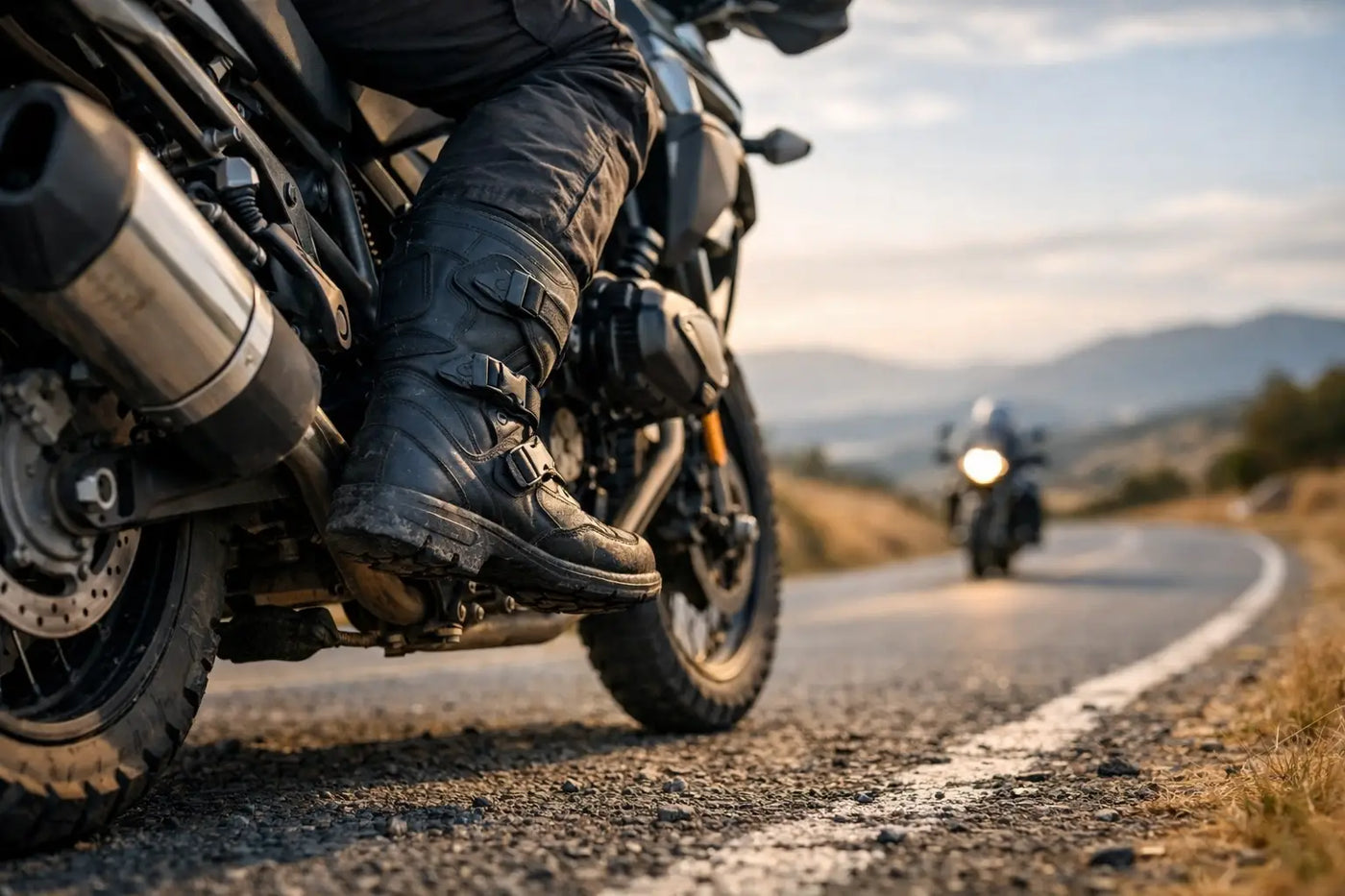
A cheap pair of boots can ruin a good ride fast. If your feet are slipping on wet pavement, your ankle feels unsupported at every stop, or the sole starts breaking down after one hard season, you are not wearing riding boots built for the road. Good motorcycle boots are not just about looks. They are about control, protection, comfort, and whether your gear still works when the miles pile up.
For most riders, the right pair sits in the sweet spot between protection and everyday wear. Some want a heavy-duty touring boot that can take weather, long hours, and highway punishment. Others want a lower-profile option that still gives solid grip and ankle support without feeling like race gear. That is why shopping this category takes more than picking the toughest-looking pair on the page.
What riding boots actually need to do
The first job of riding boots is protection. That means more than thicker leather. A proper riding boot should support the ankle, keep a firm shape around the foot, and hold up if the bike drops, the road gets rough, or you have to plant hard at a light. Reinforced toe boxes, heel support, oil-resistant outsoles, and abrasion-resistant materials all matter more than extra buckles or flashy hardware.
The second job is control. Your feet are working every ride - shifting, braking, balancing, and handling slick parking lots or uneven gravel shoulders. If the sole is too soft, too chunky, or too slippery, you feel it right away. A solid boot gives you traction off the bike and a dependable feel on the pegs. That balance matters, especially for cruiser riders, touring riders, and anyone logging serious road time.
The third job is comfort. A boot can be protective and still be miserable after an hour. Hot spots, stiff flex points, poor insoles, and heavy weight all wear on you. If you ride often, comfort is not a luxury feature. It is part of whether you will actually keep wearing the gear you bought.
How to choose riding boots for your kind of ride
Not every rider needs the same setup. A weekend bar-hop boot and a cross-country touring boot solve different problems, and pretending otherwise is how people end up with gear they regret.
Riding boots for cruising and daily use
If you ride cruisers, V-twins, or standard bikes around town and on weekend runs, you probably want a boot that blends road protection with everyday wearability. Mid-calf or over-ankle designs usually hit the mark. They give more support than casual work boots, but they do not feel overbuilt for regular use.
In this lane, leather is still a top choice because it wears in well, looks right with biker gear, and handles repeated use. Side zippers can be a big plus if you are riding often and do not want to fight laces every time. The trade-off is simple - convenience is great, but the zipper and closure system still need to feel secure and heavy-duty.
Riding boots for long-distance touring
Touring riders need more from a boot because the miles expose every weak point. Waterproofing starts to matter more. So does all-day support, weather resistance, and a sole that stays comfortable through fuel stops, roadside walks, and long stints in the saddle.
A touring boot should not feel flimsy, but it also should not fight your foot every time you move. If you ride in changing weather, a breathable waterproof lining can make a real difference. The trade-off is that some fully waterproof boots run warmer in hot climates, so your local conditions matter.
Riding boots for aggressive protection
Some riders want a more armored setup with stronger ankle structure, shin coverage, and reinforced impact zones. That makes sense if your riding style is harder, faster, or more demanding. These boots usually offer more protection, but they are not always the best choice for casual all-day wear off the bike.
That is where honesty helps. If most of your time is spent on relaxed road rides, buying the most technical boot available may leave you with something stiff, bulky, and annoying to live with. More protection is good, but only if the boot still matches how you actually ride.
The features worth paying for
A lot of boot listings throw around the same claims, but some features matter more than others.
Ankle support is near the top of the list. Motorcycle boots should lock your foot in better than standard fashion or work boots. When the bike shifts under you or the pavement is uneven, that support gives you more stability.
Outsole grip is another big one. Look for soles designed to handle pavement, wet surfaces, and oily ground around pumps and parking lots. A slick sole is a bad gamble.
Reinforced toe and heel construction are worth the money because these zones take abuse from shifting, braking, and general wear. If the toe starts collapsing early, the whole boot usually follows.
Material quality matters too. Full-grain leather still earns respect for durability and classic biker style, but modern textile and synthetic builds can work well when weight, weather resistance, or price are bigger factors. There is no one right answer. It depends on whether you prioritize old-school feel, easier break-in, or lower maintenance.
Then there is the closure system. Traditional laces look right and can give a secure fit, but they need to be managed carefully around moving bike parts. Harness styles bring strong biker attitude and solid coverage, while zip-up designs offer speed and convenience. A good closure should feel secure first and stylish second.
Style still matters - but not at the expense of function
Let us be honest. Riders care how their gear looks. Boots are part of the whole setup, same as the jacket, vest, gloves, and helmet. The right pair should match your ride and your style. Clean black leather, harness details, buckle accents, or a more stripped-down road-ready look all have a place.
But style should follow function, not replace it. Plenty of boots look tough and still fail where it counts. If it has no meaningful ankle coverage, poor traction, or weak build quality, it is not a riding boot in any serious sense. It is just a costume piece with a biker price tag.
That is one reason riders keep coming back to stores that understand the difference. A brand like American Legend Rider speaks to that mix of road use and biker identity because both matter. The gear has to work, and it has to look like it belongs in the life.
Common mistakes riders make when buying riding boots
One of the biggest mistakes is buying based on looks alone. The second is assuming any leather boot is good enough for riding. Work boots, western boots, and fashion boots may fit your style, but they are not automatically built for motorcycle control or impact support.
Another mistake is sizing wrong. Some riders buy too loose because they want quick comfort out of the box. Others size too tight expecting a dramatic break-in. Neither is ideal. A good riding boot should feel secure with enough room for comfort, but not so much movement that your heel lifts excessively or your foot slides around.
A third mistake is ignoring climate and riding season. A heavy waterproof boot can be perfect in colder states and miserable in peak summer heat. On the flip side, a lightweight vented boot may feel great in July and leave you cold and soaked in spring rain. Buy for the conditions you actually ride in, not the fantasy version of your riding life.
When a higher price makes sense
Not every expensive boot is worth it, and not every budget boot is junk. But there are good reasons some pairs cost more. Better materials, stronger sole construction, better waterproofing, more reliable stitching, and stronger protection all affect price.
If you ride a lot, paying more up front can be the cheaper move over time. A boot that lasts multiple seasons, keeps its structure, and stays comfortable is a better value than replacing a cheaper pair every year. If you ride occasionally, though, you may not need the most premium option on the shelf. That is the trade-off. Buy for your real mileage, not ego.
The right pair should earn its spot
The best riding boots are the ones you trust without thinking about them. They grip when the lot is slick, support you when the bike is loaded, and still feel good after a full day on the road. They also look right when you throw a leg over the bike, and that part counts too.
If you are shopping for your next pair, focus on the basics first - protection, support, traction, comfort, and build quality. Once those boxes are checked, then go after the style that fits your ride. A solid boot does not need hype. It just needs to hold up when the road gets real.


No comments yet. Be the first rider to weigh in.