
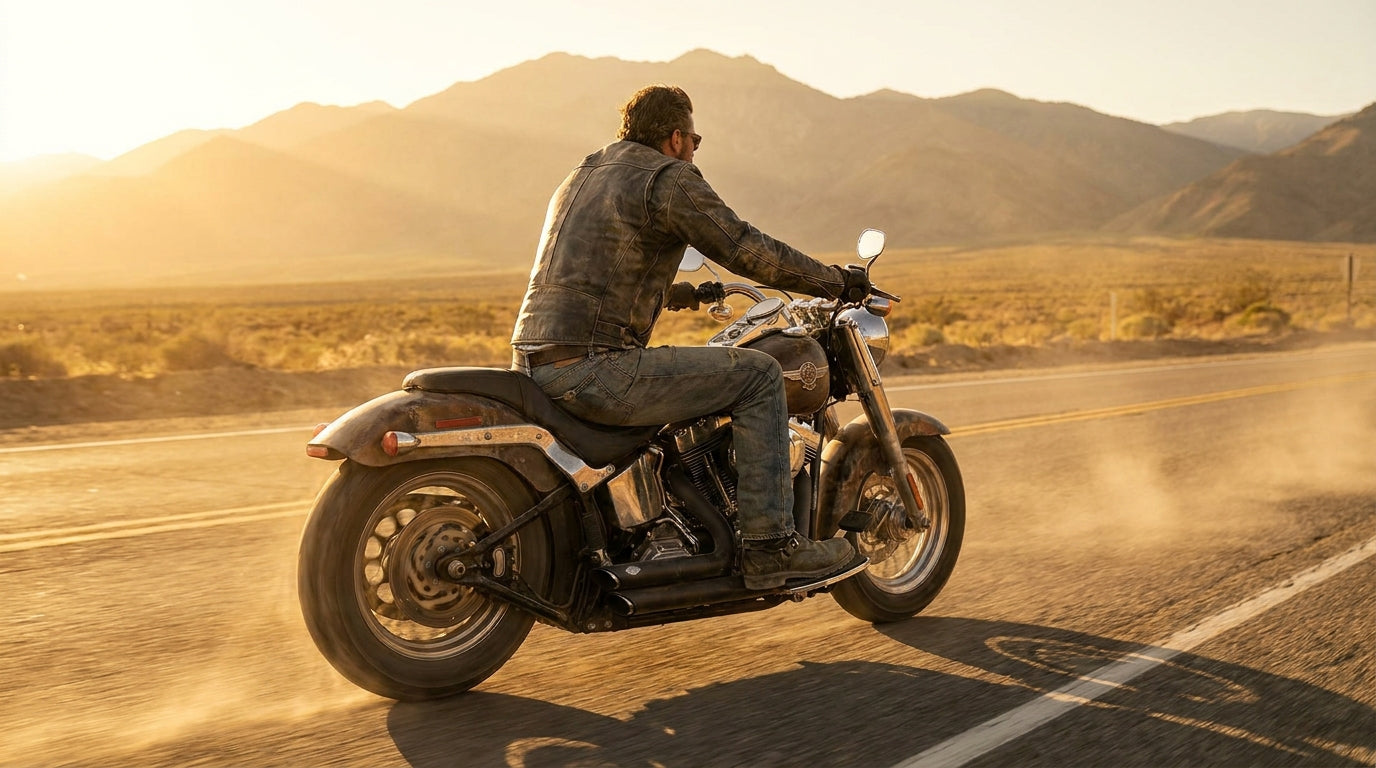
You walk into a bike meet wearing a hoodie and sneakers. Nobody says anything, but you can feel it. The guys in leather jackets and engineer boots look like they belong. You look like you wandered in from a coffee shop. Biker clothes are not a costume. They are functional gear shaped by decades of road use, and getting them right makes a real difference in how you ride, how you feel on the bike, and yes, how other riders see you.
This guide breaks down every layer of biker clothes for men, from the jacket on your back to the boots on your pegs. No fluff, no fashion-magazine nonsense. Just what works, what lasts, and what to skip.
What Actually Counts as Biker Clothes
The term "biker clothes" gets thrown around loosely. Fast-fashion brands slap some studs on a polyester jacket and call it "moto style." That is not what we are talking about here.
Real mens biker clothes fall into two categories: protective riding gear and lifestyle wear that grew out of riding culture. The first category includes leather jackets with armor pockets, kevlar-lined jeans, full-grain gloves, and DOT-rated helmets. The second covers denim vests with club patches, graphic tees, bandanas, wallet chains, and engineer boots that you can wear off the bike too.
Both categories share a common thread: durability. A quality leather motorcycle jacket should last 15 to 20 years if you condition it once a season. Compare that to a $40 faux-leather jacket from a marketplace seller that peels in six months. The price-per-year math always favors the real thing.
The Leather Jacket: Foundation of the Whole Look
If you own one piece of biker clothing, it should be a leather jacket. A proper motorcycle jacket does three jobs at once: wind protection at highway speed, abrasion resistance if you go down, and a look that never goes out of style.
Weight matters. A good motorcycle leather jacket runs 2.5 to 3.5 pounds, using cowhide between 1.0 mm and 1.3 mm thick. Anything thinner than 1.0 mm will not hold up in a slide. Anything over 1.4 mm gets stiff and heavy, making it hard to move your arms freely at the bars.
Look for YKK zippers, double-stitched seams, and a snap-down collar that stays put at 70 mph. If the jacket has CE-rated armor pockets at the shoulders, elbows, and back, even better. The leather vs. textile jacket breakdown covers the full comparison if you want the details.
Fit tip: you want it snug when you are standing, because leather stretches. If it feels comfortable in the store, it will be too loose in a month.

Vests and Cuts: Denim or Leather
The vest (or "cut") is the most recognizable piece of biker culture. It started as a practical layer: something you could throw over a t-shirt in warm weather that still gave you pockets and a place for patches.
Denim vests dominate the riding club world. A 14 oz. denim vest costs less, breathes in summer heat, and takes patches and pins without complaint. The 49/51 split denim design is the classic choice. Leather vests run heavier, cost more, and do not take patches as easily without professional stitching. But they last longer and look sharper on their own.
For a deeper look at picking the right one, check the denim motorcycle vest guide. The short answer: denim for club riding and summer, leather for solo cruising and cooler weather.

Biker Shirts and Base Layers
Under the jacket or vest, most riders go with a cotton tee or a long-sleeve henley. Biker shirts lean toward bold graphics: skulls, eagles, V-twin engines, American flags, and club or brand logos. The Harley-Davidson dealer tee is practically a uniform at rallies, but independent brands are catching up fast.
Fabric weight matters more than people think. A 5.3 oz. cotton tee (the kind you get in a multipack) will be soaked through in 20 minutes on a hot ride. A 6.1 oz. ringspun cotton shirt holds up better, dries faster, and does not cling. For cold-weather riding, a merino wool base layer under your jacket beats cotton every time because it wicks moisture instead of absorbing it.
Color runs dark in biker culture for a practical reason: road grime, chain grease, and bug splatter show less on black. Most riders keep a rotation of 5 to 8 black or dark grey tees that they do not mind getting dirty.

Riding Pants: What Goes Below the Jacket
Most new riders focus on the jacket and forget about their legs. That is a mistake. Standard denim offers almost zero abrasion protection. At 30 mph, regular jeans shred through in about 0.6 seconds of slide on asphalt, according to testing data from MotoCAP (Australia's motorcycle gear rating program).
Kevlar-lined riding jeans are the sweet spot for cruiser riders. They look like normal jeans from the outside but have aramid fiber panels stitched into the knees, hips, and seat. Brands like Bull-it and Scorpion Covert run $120 to $200 a pair. For maximum protection, full leather chaps over your jeans add a second layer of abrasion resistance. They also block wind on cold highway rides, which regular denim cannot do.
Fit matters here too. Riding pants need to be long enough that they do not ride up and expose your ankles when you sit on the bike with your knees bent. If you can see sock when your feet are on the pegs, the pants are too short.
Boots Built for the Pegs
Sneakers on a motorcycle are a bad idea. One downshift and your toe is bruised. One dropped bike and your ankle has zero protection. Proper motorcycle boots solve both problems.
The classic choices are engineer boots (like the Chippewa 27899, an 11-inch steel-toe that weighs about 3 lbs per boot) and ring-strap boots with a buckle-and-strap design. Both cover the ankle, have oil-resistant soles, and a low enough heel to grip the pegs without slipping.
Sole construction is the difference between a boot that lasts two seasons and one that lasts ten. Goodyear welt construction lets you resole the boot when the tread wears down. Cemented (glued) soles are cheaper but become landfill once they separate. For a full rundown on styles, the biker boots guide covers everything from engineer to shorty styles.
Break-in tip: new leather boots need 20 to 40 hours of wear before they feel right. Wear them around the house with thick socks for a week before your first long ride. Trying to break in stiff boots on a 200-mile trip is a recipe for blisters and sore feet.
Gloves and the Details That Finish the Look
Gloves are the most underrated piece of biker clothes. Your hands hit the pavement first in almost every crash, and bare-knuckle highway riding in cold weather makes your grip strength drop fast. A pair of full-grain cowhide gloves with a pre-curved finger design costs around $50 to $90 and lasts years.
Fingerless gloves have their place in summer, but they trade protection for airflow. The leather motorcycle gloves guide goes deeper on fit and break-in.
Beyond gloves, the accessories that define the biker look include:
- Bandanas and do-rags: keep sweat out of your eyes under a half-shell helmet.
- Wallet chains: started because riders kept losing wallets out of back pockets at speed.
- Sunglasses: wrap-around styles with polycarbonate lenses block wind and debris at 60+ mph.
- Rings and bracelets: skulls, eagles, and iron crosses are the staples.

Biker Clothes vs. Regular Streetwear: Quick Comparison
| Feature | Real Biker Clothes | Fashion "Moto" Clothing |
|---|---|---|
| Jacket material | 1.0-1.3 mm cowhide or buffalo | PU faux leather or thin lambskin |
| Jacket lifespan | 15-20 years | 6-18 months |
| Boots | Oil-resistant sole, ankle coverage, Goodyear welt | Thin sole, no ankle support, cemented |
| Gloves | Full-grain cowhide, pre-curved fingers | Synthetic or fashion leather |
| Armor/protection | CE-rated pads at shoulders, elbows, back | None |
| Price range | $150-$500 per piece | $30-$80 per piece |
| Cost per year of use | $15-$30 | $40-$80+ |
The "cost per year" line is the one that matters. A $350 leather jacket worn for 15 years costs about $23 a year. A $60 faux-leather jacket replaced every 18 months costs $40 a year and ends up in a landfill each time.
5 Common Mistakes When Buying Biker Clothes
- Buying a jacket that fits "comfortably" off the rack. Leather stretches. If it is not snug on day one, it will be baggy in a month. Size down from your normal fit, especially across the chest and shoulders.
- Skipping gloves because "it is summer." Gravel rash on your palms heals slowly and keeps you off the bike for weeks. At minimum, grab a pair of ventilated leather gloves with knuckle armor.
- Wearing work boots and calling them riding boots. Work boots like Timberlands have aggressive tread patterns that catch on the shift lever, and their soft soles compress on the pegs. Motorcycle boots have a smooth shift pad and a stiff sole for a reason.
- Buying no-name marketplace gear with no safety rating. Cheap motorcycle jackets from anonymous sellers use mystery-grade leather (sometimes bonded leather scraps glued together). They have no abrasion rating, no armor, and no warranty. If it does not list the hide type and thickness, walk away. American Legend Rider stocks gear from brands that publish their specs because that transparency matters when your skin is on the line.
- Overdoing the patches and pins on a new vest. In motorcycle culture, patches carry meaning. Rockers (curved top and bottom patches) are club-specific. Wearing unearned patches can cause real problems at rallies and meets. Start with a clean vest, add simple pins, and let your patch collection grow with your riding history.
Where to Start
If you are building a biker wardrobe from zero, start with three pieces: a leather jacket, a pair of proper boots, and gloves. Those three cover your safety bases and give you the core look. Add a vest, some riding shirts, and accessories over time.
Quality biker clothes for men are an investment, not an expense. The right gear protects you, lasts for years, and actually looks better as it ages and develops a patina. If you are ready to start putting a kit together, the men's biker gear collection is a solid starting point with jackets, vests, gloves, and boots that are built for real riding.

No comments yet. Be the first rider to weigh in.