
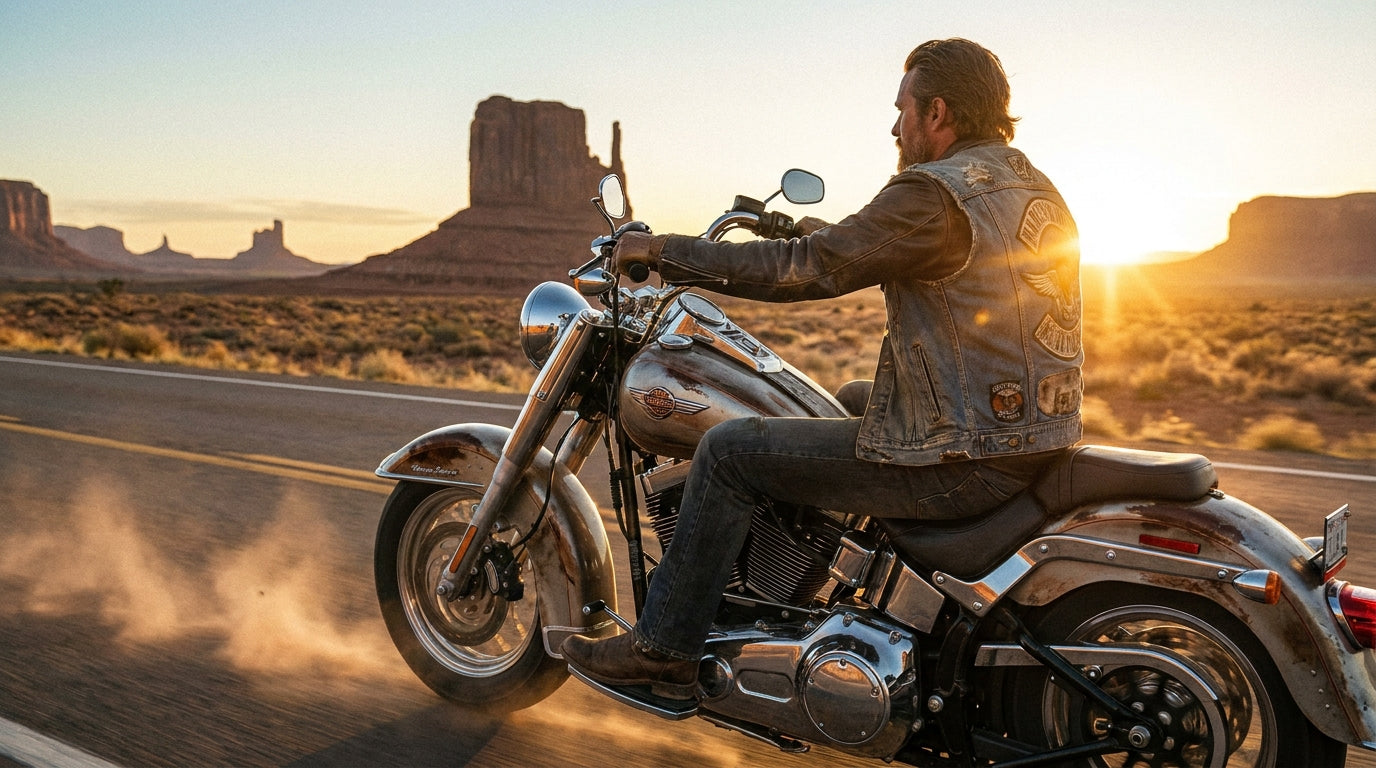
Most denim motorcycle vests sold online are fashion pieces wearing a biker label. Thin 8-oz cotton, single-stitch seams, armholes that ride up the moment you lean forward on the bars. They look sharp in the product photos, then start fraying after two months of actual riding. The gap between a real riding vest and a costume piece comes down to a few construction details most listings never mention.
This guide covers what separates a quality denim motorcycle vest from a cheap knockoff. You'll learn the denim weight that holds up to wind and road wear, how armor inserts work in a vest, what "club cut" means and why it matters, and which stitching details tell you a vest will last years instead of months.
What Makes a Denim Motorcycle Vest Different from a Fashion Vest
A fashion denim vest is cut for standing around. A denim motorcycle vest is cut for sitting on a bike with arms extended forward. That single difference shapes everything about the pattern.
Riding vests have a longer back panel, usually 2 to 3 inches longer than the front. This keeps the vest from riding up and exposing your lower back when you lean into the handlebars. The armholes are wider and cut further back to give full shoulder rotation without bunching. Side panels use gussets or elastic inserts for movement. The Vance Leather Denim Club Vest, for example, uses dual side lace adjusters that let you tighten or loosen the fit over different base layers, from a t-shirt in July to a hoodie in October.
Collar style is another tell. Fashion vests often have a tall stand-up collar that catches wind at speed. Riding vests keep the collar low or use a simple notched lapel that sits flat against a jacket underneath. This matters at highway speed, where a flapping collar creates drag and noise right next to your ears.
If a vest doesn't specify its cut is designed for riding position, it's probably not.

Denim Weight and Weave: What to Look For
Denim weight is measured in ounces per square yard. Most fashion denim sits between 8 and 10 oz. That's fine for walking around town. On a motorcycle at 60 mph, 8-oz denim flaps in the wind, stretches at the seams, and wears through faster than you'd expect.
For riding, look for 12-oz denim at minimum. The standard in purpose-built motorcycle denim is 12 to 14 oz. At that weight, the fabric holds its shape in the wind, resists abrasion better, and provides enough body to support the weight of patches and pins without sagging. Some heavy-duty vests use 14-oz raw selvedge denim that actually improves with age, developing a natural patina unique to the rider.
The weave matters too. Standard twill weave (the diagonal pattern in most jeans) is the baseline. Some motorcycle-specific denim uses a tighter 3x1 twill or adds a small percentage of Cordura blended into the cotton for abrasion resistance. These blended fabrics won't replace a full armored jacket, but they add a measurable layer of slide protection over a plain cotton vest.
One detail worth checking: stretch denim. A 2% elastane blend gives the vest slight flex for comfort without losing durability. More than 5% elastane and you're back in fashion territory, where the fabric stretches out and loses shape after a few rides.
Club Cut vs Concealed Carry vs Classic: Vest Styles Compared
Not every denim motorcycle vest follows the same pattern. Three main cuts dominate the market, and each serves a different riding purpose.
| Style | Key Feature | Back Panel | Closure | Best For |
|---|---|---|---|---|
| Club Cut | Extended back, interior patch pockets | 2-3" longer | Snap front | Club riders, patch display |
| Concealed Carry | Built-in gun pockets (left + right) | Standard or extended | Zipper + snaps | Riders who carry |
| Classic | Clean front, minimal hardware | Standard length | Button or snap | Casual rides, everyday style |
Club cut is the most common for serious riders. The extended back panel gives a clean canvas for a large back patch, and the interior snap pockets keep valuables secure without visible bulges. Most club-cut vests also have two interior chest pockets for phones, wallets, or documents.
Concealed carry vests have dedicated firearm pockets sewn into the lining on both sides. These pockets use reinforced stitching and usually have a Velcro or snap closure for quick access. If you ride in states where carrying is legal, check the pocket dimensions against your specific firearm before ordering. Not every "concealed carry" vest fits every model.
Classic cut vests work best as a casual layer or for riders who don't need interior storage. These are the simplest build, closest to a standard fashion vest, but with better armhole cuts and heavier denim. They layer cleanly over a t-shirt or flannel for weekend rides.
For a deeper look at building a complete riding setup around your vest, our guide to building a ride-ready biker look covers the rest of the gear.

Armor in a Denim Motorcycle Vest: What Actually Works
A denim vest is not a substitute for a proper armored jacket. That's worth stating up front. But some denim vests include armor pockets that accept CE-rated back protectors, and that added layer can make a real difference in a slide.
The most useful armor pocket is the back panel insert. A CE Level 1 back protector (EN 1621-2) transmits less than 18 kN of force on impact. A CE Level 2 drops that below 9 kN. Some vest manufacturers build foam-padded pockets into the back panel that accept standard CE inserts. The insert slides in behind the lining and sits flat against your back without showing through the denim.
Shoulder and chest armor is rare in vests because the armhole design conflicts with fixed armor placement. If you need upper-body protection, an armored base layer under the vest (brands like Knox or Forcefield make thin ones) is a better approach. The vest sits over it and looks the same from the outside.
One thing that doesn't work: aftermarket armor stuffed inside a vest that wasn't designed for it. If the vest has no dedicated pocket, the insert shifts during a ride, bunches up, and won't be in position when you actually need it. Only use armor in vests that have built-in, stitched-in pockets for that purpose.
For a full breakdown of what protection layers to pair with your vest, check out our motorcycle protective gear guide.

How a Denim Motorcycle Vest Should Fit
Vest fit on a motorcycle is different from vest fit standing in front of a mirror. The right approach: try the vest on while sitting in your riding position, arms extended forward as if gripping handlebars.
Here's what to check:
- Back coverage. The vest should cover your lower back completely in riding position. If your skin shows between the vest and your belt line when you lean forward, the back panel is too short. Look for an extended-back or club-cut design.
- Shoulder seam. The seam should sit right on the point of your shoulder, not inward (too tight) and not hanging off the edge (too loose). A vest that's too wide across the shoulders flaps at speed.
- Armhole clearance. You should be able to rotate your arms fully without the vest pulling across your chest or the side seam digging into your armpit. This is where fashion vests fail hardest. Tight armholes look good standing up but bind the moment you reach forward.
- Chest closure. Snap or zip the vest fully and sit in riding position. You should have about 1 to 2 inches of ease across the chest. Too tight and you can't layer underneath. Too loose and the vest catches wind.
- Front length. The front panels should end at or just below the belt line. Longer than that and the vest bunches when you sit.
Most denim motorcycle vests come in S through 4XL. Sizing varies between brands. A medium from Vance Leather fits a 40 to 42 inch chest. The same medium from another brand might fit 38 to 40 inches. Always check the brand's specific size chart and measure your chest at the widest point over a t-shirt before ordering.

Patches, Pins and Club Rules: What Goes on a Denim Vest
A denim motorcycle vest is the standard canvas for patches in biker culture. But where you place them, and what you display, carries meaning. Getting it wrong can create problems you don't want.
The 3-patch rule is the big one. A three-piece back patch (top rocker, center logo, bottom rocker) identifies a member of a motorcycle club. If you're not a patched member of that specific club, wearing a three-piece back patch can draw confrontation from actual club members. This isn't folklore. It's actively enforced by clubs across the US.
What's fine for independent riders: a single large back patch (no top or bottom rocker), individual pins, side patches, front name or flag patches, and bottom rockers that identify your state or riding group without pairing with a center club logo. Veterans, first responders, and riding associations typically use single-piece patches or two-piece layouts that clearly signal "independent" rather than "club."
Where patches go:
- Front left chest: name patch or small club/riding group patch
- Front right chest: flag, motto, or position patch
- Back center: main patch or design (single piece for independents)
- Left shoulder: American flag (stars face forward)
For sewing patches onto denim, use heavy-duty nylon thread (size 69 or higher) and a leather needle on your sewing machine. Hand-stitching works but takes longer and is less consistent. Iron-on patches look fine at first but peel off within a few months of riding. For more biker gear essentials, our biker clothing guide covers the full kit.

5 Mistakes Riders Make Buying a Denim Motorcycle Vest
1. Buying by price alone. A $25 denim vest from a marketplace seller almost always uses 8-oz cotton with single-stitch seams. It will fray at the armholes within weeks. A $85 to $165 vest from a known motorcycle brand uses 12-oz+ denim with reinforced double stitching. The cost per year of use is actually lower with the better vest.
2. Ignoring the armhole cut. Fashion vests have tight, high-cut armholes that look slim when you're standing. On a bike, they bind your shoulders and restrict movement. Always check that the vest is cut for riding position with wide, low armholes.
3. Skipping the sit-down test. Never buy a vest based on how it looks standing in front of a mirror. Sit on your bike (or a chair) in riding position and check that the back panel covers your lower back, the front doesn't bunch, and the shoulders don't pull.
4. Assuming "motorcycle" in the listing means it's built for riding. Many online listings add "motorcycle" to the title for search purposes. The vest itself is just a standard fashion piece. Look for specific mentions of extended back panels, double-stitched seams, 12-oz+ denim, and reinforced snap or zipper hardware.
5. Ordering without checking the brand's size chart. Denim motorcycle vests are not sized like dress shirts. A large from one brand might be a medium in another. Measure your chest circumference over a t-shirt and compare it to the brand's specific chart before clicking buy. Returns on vests get expensive when you're paying return shipping on a bulky garment.
Finding the Right Denim Motorcycle Vest
A good denim motorcycle vest becomes part of your riding identity. It carries your patches, fits your build, and goes on every single ride. The vest that does that uses 12-oz+ denim, double stitching at every stress point, and a cut designed for leaning forward with arms out.
Don't settle for a fashion piece pretending to be motorcycle gear. The difference shows up fast once you're on the road.
If you're shopping for one, the men's motorcycle vest collection has denim and leather options from brands that build specifically for riders.
No comments yet. Be the first rider to weigh in.