
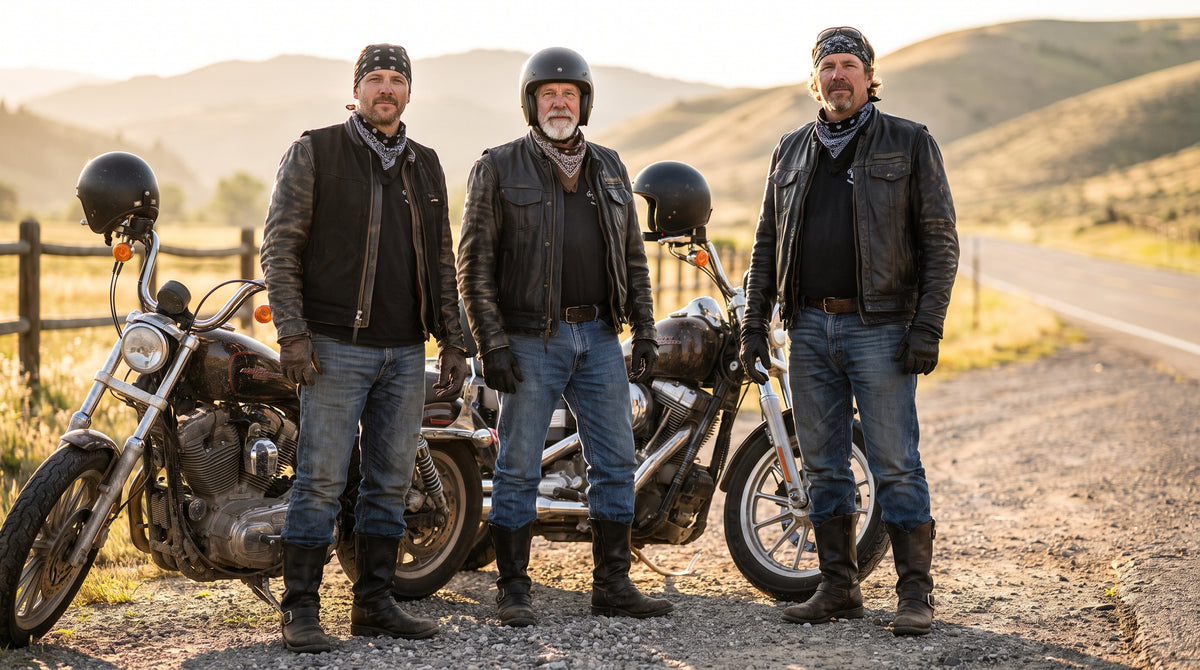
Walk any rally parking lot and you can spot the difference in about four seconds. One rider is wearing a vest that has been through ten summers and still sits right on the shoulders. The next one is wearing a costume he ordered last week, and the shine on the leather gives it away before he ever gets off the bike.
Biker apparel is not a look you buy in one order. It is a stack of pieces that each do a job, and the riders who get it right buy in the order that matters. This guide walks the whole kit from the ground up, tells you what each layer is actually for, and points out where the money is worth spending and where it is not.
What Counts as Biker Apparel and What Is Just Costume
Real biker apparel earns its place two ways. It either protects you when things go wrong, or it survives conditions that ordinary clothing cannot. A cotton hoodie disintegrates on pavement at 40 mph in under a second. A 1.2 mm cowhide vest does not.
The honest split looks like this:
- Protective layers: helmet, jacket, gloves, boots. These have a safety job and a standard behind them, like DOT for helmets or CE Level 1 and 2 for armor inserts.
- Identity layers: vest, tees, patches, bandanas. No crash rating, but they are the reason the culture looks the way it does.
- Weather layers: thermals, rain shells, heated gloves. Invisible in photos, and the reason you finish the ride.
Most new riders buy the identity layer first and the protective layer last. That order is backwards, and it is the single most common mistake in the whole category.
The Leather Vest: The Signature Piece of Biker Apparel
If one garment defines biker apparel, it is the vest. It carries your patches, it layers over anything from a tee in July to a hoodie in October, and a good one outlives the bike you bought it for.
Look for full grain or top grain cowhide in the 1.1 to 1.3 mm range. Thinner than that and the patch stitching pulls through. Check that the armholes sit flat when your arms are forward on the bars, because a vest cut for standing looks wrong in a riding position.

Denim vests are the other classic route. They breathe better in heat, they take patches just as well, and they cost less. They give up abrasion resistance, so treat a denim vest as an identity layer rather than protection. Our denim motorcycle vest guide breaks down the weights worth buying.

Jackets: Leather or Textile, and When Each Wins
A leather jacket is still the benchmark for abrasion. Cowhide in the 1.0 to 1.4 mm range slides instead of tearing, and it molds to you over a couple of seasons in a way no synthetic does.
Textile wins on two fronts: ventilation and weather. A mesh textile jacket moves real air at 30 mph where leather just holds heat, and most textiles come waterproof out of the box. The tradeoff is lifespan, since a textile shell is usually done in four or five hard seasons.
Whichever you pick, check the armor. Empty shoulder and elbow pockets are common on budget jackets, and CE Level 1 inserts cost far less than the ER visit they prevent. Our armored jacket guide covers what the CE levels actually mean.

Tees and Hoodies: The Layer You Wear 300 Days a Year
This is the layer riders actually live in, and it is where most of the personality sits. Look for a heavier cotton, around 5.5 to 6 oz, because lightweight print tees lose their shape and the graphic cracks after a dozen washes.
Fit matters more than people expect. A tee that bunches under a vest turns into a hot rope across your back after an hour in the saddle. Size for how it sits under your outer layer, not how it looks alone.

Hoodies are the shoulder-season workhorse. A mid-weight fleece hoodie under a vest handles most 50 to 65 degree mornings without a liner. Go with a full zip if you layer it under a jacket, since pulling a pullover off at a gas stop with a helmet on your head is its own kind of misery. There are more options in our biker hoodie roundup.

Gloves: The Piece Riders Skip and Regret
Hands hit first. It is reflex, and no amount of intention changes it. Gloves are the cheapest serious protection in the entire biker apparel stack, usually well under the price of a tank of gas for a weekend trip.
Hard knuckle protection is worth the small bulk. Look for goat or cowhide palms with a doubled palm patch, and check that the cuff actually closes over your jacket sleeve rather than sitting inside it, which lets a glove strip off in a slide.

If you ride through weather, a second waterproof pair pays for itself the first cold rain. Wet hands go numb in about fifteen minutes at highway speed, and numb hands do not work the front brake well. Our waterproof glove breakdown covers what actually stays dry.

Boots: Ankle Coverage Is the Whole Point
A riding boot needs three things a fashion boot does not have: coverage above the ankle bone, an oil-resistant sole that grips a wet peg, and a shank stiff enough that the footpeg does not fold the sole in half.
Height above the ankle is the one to not compromise on. Most foot and ankle injuries in low-speed drops come from the bike pinning the joint, and a boot that ends below the bone offers nothing there.

Lace-up boots give a more adjustable fit across the instep, which matters if you have a high arch. Just tuck the laces, because a loose lace and a rotating chain end the same way every time. Our biker boot fit guide goes deeper on sizing.

Head and Face: Helmet, Bandana, and What Goes Under
The helmet is the only piece of biker apparel with a federal standard attached to it. A DOT-compliant helmet carries a real DOT sticker on the back and weighs roughly 2 to 3 lbs in half-shell form, versus the novelty shells that come in near 1 lb and meet nothing at all.
Open-face shells are the cruiser favorite for a reason. You get the airflow and the view, and you keep the shell over the skull.

A bandana under the shell does more than it looks like. It keeps sweat out of the liner, which is the main thing that makes a helmet start to smell by season two, and it cuts the wind noise coming under the edge.

Biker Apparel Compared: What Each Layer Is Really For
| Layer | Main job | What to look for | Skip it if |
|---|---|---|---|
| Helmet | Impact protection | Real DOT sticker, 2 to 3 lbs half shell | Never skip it |
| Jacket | Abrasion and weather | 1.0 to 1.4 mm leather or armored textile | Short town trips in heat |
| Vest | Identity and layering | 1.1 to 1.3 mm hide, flat armholes | You already run a jacket daily |
| Gloves | Hand protection | Hard knuckle, doubled palm, cuff over sleeve | Never skip it |
| Boots | Ankle and grip | Over-ankle height, oil-resistant sole | Never skip it |
| Tee or hoodie | Comfort base layer | 5.5 to 6 oz cotton, fit under the vest | Nothing, this is the daily layer |
5 Mistakes Riders Make Buying Biker Apparel
- Buying the vest before the gloves. The vest is the fun purchase and the gloves are the one that saves your hands. Flip the order and you are covered from the first ride.
- Sizing a jacket standing in front of a mirror. Your riding position pulls the sleeves back three to four inches. Reach forward like you are on the bars before you decide it fits.
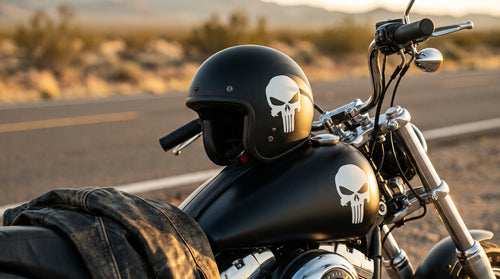
- Trusting a novelty helmet. If the shell weighs about a pound and the DOT sticker looks printed on rather than applied, it is decoration.
- Treating leather once and forgetting it. Untreated hide dries and cracks at the seams. A conditioner twice a season is the difference between five years and fifteen.
- Buying no-name marketplace gear for protective layers. Unrated shells, unknown hide thickness, and no support when a seam blows at month three. Identity pieces can be cheap. Protective pieces should not be.
Biker Apparel by Season: Heat, Cold and Rain
The same kit does not work in August and November. Riders who stay comfortable are not tougher, they just swap two or three pieces and leave the rest alone.
Hot weather
Airflow beats coverage once you pass about 85 degrees. A mesh textile jacket moves real air where leather traps it, and a vest over a light tee keeps the look without the heat load. Counterintuitive part: keeping sleeves on usually beats bare arms, because covered skin sweats into moving air instead of cooking in direct sun.
Cold weather
Wind chill at 60 mph turns a 50 degree morning into the high 20s on exposed skin. Base layer, mid layer, windproof shell is the order that works. The shell matters most, because a thick sweater with wind blowing through it does close to nothing.
Rain
Waterproof gloves and a sealed shell are the two pieces worth carrying. Wet hands go numb in roughly fifteen minutes at highway speed, and numb fingers do not modulate a front brake well. Everything else can get damp without ending the ride.
How to Make Biker Apparel Last a Decade
Good gear is a one-time buy if you maintain it, and most riders do not.
- Condition leather twice a season. Hide dries from the inside and cracks at the seams first. Two treatments a year is the difference between five years and fifteen.
- Never machine dry a leather vest or jacket. Heat shrinks the hide and the fit is gone permanently. Air dry away from direct sun.
- Wash graphic tees inside out in cold. Hot water and a tumble dry are what crack a print, not the number of washes.
- Replace a helmet after any real impact. The liner crushes once by design. A shell that looks fine can be finished inside.
- Re-proof textile gear yearly. The waterproof coating wears off long before the fabric does, and a spray-on treatment restores most of it.
Building Your Kit Without Buying It All at Once
You do not need the whole stack in one month. A workable order is helmet, gloves, boots, then jacket, then the vest and the tees that make it yours. That sequence puts every dollar on protection first and still gets you looking right by the end of the season.
Buy the protective pieces once and buy them properly. Real hide, a real DOT sticker, and stitching that holds cost more up front and less over ten years than replacing marketplace gear every other season.
If you are putting a kit together now, the biker gear collection is where I would start, and our biker clothing checklist is a good second read once you know which layer you are missing.
No comments yet. Be the first rider to weigh in.